Tuesday, 7 July 2015

Rohingyas get all rights, West Pak refugees none

Source Tribune India, 8 July
 
Centre concerned over refugees from Myanmar and Bangladesh
  • Rohingyas get all rights, West Pak refugees none
  • Rohingya Muslims outside their makeshift shanties at a slum in Jammu. Tribune File Photo


Rohingya Muslims, displaced from Myanmar and Bangladesh due to internal strife in their respective countries, have managed to get citizenship rights in Jammu and Kashmir.

On the other hand, West Pakistan refugees, a majority of whom are Dalits, have been struggling even for the basic fundamental rights.

Rohingya Muslims have managed to enter the state in recent years, but poor refugees from West Pakistan have been living in Jammu since 1947. They had entered Jammu to survive the holocaust of Partition.

Even after 67 years, these Dalit refugees have been struggling to get basic rights. Rohingyas have managed "everything" due to patronage by some elements in the administration and support of some political groups.

The issue of Rohingyas living in Jammu and Kashmir came to the fore again after a decision of the Union Government to convene a meeting of seven states to discuss the issue.

Concerned over more than 1 lakh Rohingya Muslims settling in India, the Centre has convened a meeting of top officials of seven states, including Uttar Pradesh and Jammu and Kashmir, on July 20 to discuss "monitoring their activities given their vulnerability to radicalisation".

"Rohingyas have been illegally infiltrating into Jammu and Kashmir. Our forefathers had entered the state during Partition. We are genuine refugees, but the authorities are giving importance to infiltrators rather than solving our issue," said Labha Ram Gandhi, chairman of the West Pakistani Refugees Action Committee.

"Illegal Bangladeshis and Rohingyas have been given all democratic and constitutional rights, but we are deprived of even basic fundamental rights," he rued. He added that no other country gave all rights to infiltrators and treated genuine refugees as "slaves".

Data says there are 25,460 West Pakistani families in the Jammu region, of which nearly 90 per cent are Dalits. These families are spread in Jammu, Kathua and Samba districts.

At present, nearly 1,000 Rohingyas are living in many makeshift slum colonies in different parts of the Jammu region, mostly working as ragpickers and labourers.

Interestingly, a majority of Rohingyas have managed to get ration cards and other official documents. With the connivance of some politicians and officials in the administration, a number of Rohingyas have been leading settled lives in Jammu and adjoining localities.

Furthermore, some radical groups are active solving daily problems of these illegal infiltrators in the name of social service. The case of West Pakistan refugees is not the same.

Sunday, 5 July 2015

Letter From America: Maung Maung Ohn lies about the Rohingya people

Source Asian Tribune, 5 July
By Dr. Habib Siddiqui

The Outlook India magazine has recently conducted an interview of General Maung Maung Ohn, the chief minister of the Rakhine state of Myanmar. In that he shared his opinions about the Rohingya people who are recognized as the most persecuted people in our planet. During his tenure in office we have seen the exodus of tens of thousands of Rohingyas who have fled the country and have become the 'boat people' of our time. He has been a major player in implementing Myanmar government policies that has led to such genocidal activities against the Rohingya people.

General Ohn epitomizes racism and bigotry and his replies to various questions show once again his hideous criminal mind and deplorable bias against the persecuted Rohingya people. Here is a sample of his lies:

1. He denies that there is any discrimination or persecution of the Rohingya people.

2. He says that the term 'Rohingya' was not mentioned anywhere before the '50s or '60s. And that his objection to the use of the term stems from the perception that granting such special status has other significant implications. It would entitle them to special social, political and even legal benefits. If they are given this privilege, their next step will be to demand separate statehood.

3. He claims that in Myanmar, minorities coexist harmoniously.

4. And here is a sample of half-truth from General Ohn's mouth:

• There has been communal violence in the state. Not just 2012 but in 1942 they had carried out a genocide in north Rakhine state.

Only a liar or a propagandist can afford to lie like Maung Maung Ohn. Lest we forget, soon after taking office in June last year in Arakan, when the entire world community was highly critical about Myanmar government policy and the lack of supplies and humanitarian aids getting to the Rohingya IDP camps, he audaciously claimed, "When we visited IDP camps [for Rohingyas], there were food, good toilets, and good living conditions. But in some ethnic Rakhine villages, there is no toilet, no electricity, and no drinking water." He definitely has perfected the art of lying. If the Nazi criminal propagandist Joseph Goebbels were alive today, he would have been very proud of his brain child!

Maung's views on the absence of persecution of the Rohingya people and that they are living securely and that the minorities are coexisting in harmony are simply ludicrous. His bloated claims are not shared by any independent observer, international NGO and human rights group, let alone the UNHCR. According to reliable UN estimates, some 150,000 Rohingyas are now living in Nazi-like concentration camps, while more than a hundred thousand have fled the country and many have died in the seas while trying to do so in recent years since the genocidal activities of 2012.

Contrary to Maung's claims that the term 'Rohingya ' is an invention dating only from the 1950s, facts are that the term was in vogue since at least the days of Bodaw Paya's rule in the late 18th century, and that any curious researcher may find the mention of the term in history books and travelogues of Europeans who had visited the region.

Consider, for instance, the account of Francis Buchanan, a surgeon with the British East India Company, who had traveled to imperial Burma in 1799 and met members of a Muslim ethnic group "who have long settled in Arakan [Rakhine], and who call themselves Rooinga, or natives of Arakan." That would indicate there were self-identified Rohingya living in Rakhine at least 25 years before the 1823 cut-off for citizenship of modern day Myanmar [Burma].

Gregory Poling who is a fellow with the Sumitro Chair for Southeast Asia Studies at the Center for Strategic and International Studies (CSIS) in Washington, D.C. writes, "Even if the name "Rohingya" is too taboo to be accepted inside Myanmar, the historical record is clear that the ethnic group itself has existed in Arakan, or Rakhine State, for centuries. A significant Muslim population lived in the independent Kingdom of Mrauk-U that ruled modern-day Rakhine State from the mid-fifteenth to late eighteenth centuries. Many of the Buddhist kings of Mrauk-U even took Muslim honorifics. The evidence suggests that this community is the origin of today's Rohingya. The group likely assimilated later waves of immigrants from Bangladesh during and after British rule, but it did not begin with them."

Bengali poets and writers of Arakan of the Mrauk-U dynasty that ruled the region since 1430 had called the territory Roshang and Rohang in their literary works. As I have pointed out elsewhere, people in lower Bengal and Arakan add the partial word - iya - at the end of a district or region to identify its people. Thus, the people of Chatga (Chittagong) came to be known as Chatgaiya, and so is the case with the people of Rohang or Roshang who came to be called Rohingya. [Note that in southern Chittagonian dialect, the sound -sha - is often transformed to - ha – without 's'; as such, what is Roshang in pure Bengali would be sounded as Rohang.]

Now let me get back to Maung's half-truth. He fails to provide the full picture about the 1942 pogroms that saw deaths of tens of thousands of Rohingya people. The casualty was almost one-sided, and it was the Rohingya and not the Rakhine people that suffered enormously during the Japanese occupation of Burma.

Some historical background may suffice here to understand the event. When the Second World War broke out, the territory of Burma was under British occupation. To many Burmese, cooperating with the Japanese fascist army was preferable to living under the British rule. Aung San, father of Suu Kyi, and his group of comrades belonging to the BIA (Burma Independent Army) were at the forefront of that alliance with the fascist Japanese army when Japan entered the war on December 8, 1941. Japan captured Rangoon (Yangon) on March 7, 1942 leading to the exodus of an estimated half a million Indians and Muslims. "Thousands are reported to have died of starvation, disease or during sporadic military attacks in one of the darkest but least reported incidents in modern Burmese History," writes Syed Ashraf Alam, a Rohingya historian.

Japan dropped bombs in Akyab (the main town of Arakan) on March 23. 24 and 27 leading to the withdrawal of the British administration. Since the Muslim population, in general, and the Rohingya people, in particular, in the Arakan (Rakhine) region were deemed collaborators of the British regime, they were targeted for elimination soon after Japan occupied the region in late March of 1942 by fascist Rakhine Buddhists. A genocide of Muslims followed. According to Alam, "The Rakhine communalists in connivance with Burma Independence Army (BIA) led by Bo Rang Aung brought about a pogrom massacring about 1,00,000 innocent Rohingya Muslims, driving out [another] 80,000 of them across the border to East Bengal, devastating their settlements and depopulating the Muslims in some parts of Arakan."

To quote Professor Abid Bahar, a foremost authority on the Rohingya people having studied the subject since the mid-1970s, "In 1942 Japan occupied Burma and the ultra-nationalist Buddhists jointly massacred the Karens, the Mons and in Arakan the Rohingyas. Feeling the threat of extinction, and certain Rakhines determined to drive out the Muslims of Arakan, Muslim leaders officially took the already existing name for their suffering community as the Rohingyas. However, Rohingyas were conveniently identified by the Rakhine extremists as being the Chittagonians. During the time of Japanese occupation, the number of Rohingya death in Arakan was staggering to be over 100,000. Rohingyas call the event as the "Karbalai Arakan," the bloodshed in Arakan."

What happened in Arakan in 1942 was truly ethnic cleansing and nothing short of that. In his speech at the Burmese Parliament, Sultan Mahmud, former Health Minister and Member of Parliament from Akyab district, said, "I refused to accept that there was a communal riot in Arakan in 1942. It was a pre-planned cold-blooded massacre. On March 28, 1942 a group of 37 soldiers who are trekking their way to Burma was intercepted, persuaded and prevailed upon to attack and loot the Moslem villages. The cold-blooded massacre began with an uncontrollable fury in the Moslem village of Letma on the western bank of the Lemro River in Maybon townships. It spread like a conflagration in all directions and the unsophisticated villagers with the prospect of gain joined with guns, dahs, spears and all other conceivable contrivances of destruction. Some high-minded and far-sighted Arakanese gentlemen intervened at the risk of their lives to prevent the deadly onslaught. But all their pious efforts were in vain.

There was absolutely no attempt at retaliation even by way of self-defence by the Moslem and it was simply one-sided affair. Not a single Rakhine suffered even a scratch. Maybon Township in Kyaukpru District and the six townships of Minbya, Myohaung, Pauktaw, Kyauktaw, Ponnagyun and Rathidaung in Akyab district were depleted of Moslem by murder and massacre and those who escaped evacuated through long tortuous and hazardous routes across mountains to Maungdaw. Twenty Two thousand Moslem reached Subirnagar Camp in Rangpur District in India but very large number had stayed behind in Maungdaw owing to lack of facilities, disease and destitution.

These refugees in Maungdaw who had lost their dearest one and all their property now turned against the Rakhine and fell upon them in retaliation. This is what exactly happened in 1942 and I leave it to your impartial readers to judge whether it could be term as communal riot. There were Moslem too who saved a good number of Arakanese Buddhists from the wrath of the Moslem and brutality of the Japanese but modesty forbids me from mentioning their names. I give below the number of Moslem villages totally destroyed in the various townships in 1942. They are: (1) Myebon in Kyaukpru District 30 villages; (2) Minbya in Akyab District 27 villages; (3) Pauktaw in Akyab District 25 villages; (4) Myohaung in Akyab District 58 villages; (5) Kyauktaw in Akyab District 78 villages; (6) Ponnagyun in Akyab District 5 villages; (7) Rathedaung in Akyab District 16 villages; and (8) Buthidaung in Akyab District 55 villages. Total 294 villages. All the villages in Buthidaung Township were re-occupied and rehabilitated by the original inhabitants and refugees after the War but not a single one in other townships." [Sultan Mahmud, Muslims in Arakan, The Nation, Rangoon, Sunday, April 12, 1959]

Soon the Rakhine Buddhists were streaming in droves from the north as the Rohingya Muslims were streaming from the south, and Arakan stood divided into two distinct territories, a Muslim north and a Buddhist south one. Since then, the traditional relation between the two sister communities deteriorated.

According to historian Moshe Yoger, "When the Japanese advanced into Arakan in 1942, the Buddhists instigated cruel measures against the Muslim population. Thousands of Muslims (their exact number is unknown) were expelled from regions under Japanese rule in which Buddhists constituted a majority. The Muslims fled to eastern Bengal, or to North Arakan, seeking refuge in territories under British military rule. As they fled, many were killed or died of starvation. For their part, Muslims conducted retaliatory raids from British controlled territories where they were the majority, particularly in the vicinity of Maungdaw. In short order, these acts of mutual slaughter caused the Buddhist population of North Arakan to flee just as the Muslims had abandoned the South. In effect, Arakan was divided into Buddhist and Muslim areas. From December 1942 until April 1943, the British waged an unsuccessful counteroffensive, and the Japanese were able to expand their hold over most Muslim regions in Arakan including Maungdaw. The situation continued to deteriorate, and communal strife grew worse impelling more Muslims to abandon their homes."

As can be seen in much contradistinction to Maung's assertions, facts are that it was the Rohingya people who were the major victims of 1942 pogroms, and not the Rakhine Buddhists who had collaborated with the fascist forces to drive out and/or kill the Rohingya and other Muslims not just inside the Arakan region but all across Burma.

After the British forces reclaimed the territory in January of 1945, thanks to the sacrifice of the Rohingya Muslims of British Force V to turn the tide of the war, many of the refugees who had fled to Chittagong and other parts of today's Bangladesh returned only to find their homes and properties occupied by the usurping Rakhine and other Buddhists. This led to a series of lawsuits filed in the courts to establish ownership of 'disputed' properties.

In the post-World War II era, due to sensitivity of the situation when Britain had promised to get out of India and Burma, and had also been cooperating with Aung San's group (which just before the fall of the Japanese army had switched the side again being betrayed by the Japanese army, which did not grant the promised independence) the British administration was, however, reluctant to bring back the displaced Rohingya from today's Bangladesh. [It also betrayed on granting them a 'Muslim National Area' in the northern Arakan as a reward for their loyalty.] Some 13,000 Rohingyas were not able to return from refugee camps inside India (and today's Bangladesh). Nevertheless, some Rohingya refugees did resettle in the Northern Arakan State, later to be called Mayu Frontier Administration Area. Some Rakhine usurpers were forced out of Muslim-majority areas in the north. But the southern Arakan, which saw ethnic cleansing of the Rohingya and Muslim population by the hostile Rakhine Buddhists, was off-limits to the returning refugees. Many of them continued to live as refugees in the north. This event has led to permanent souring of the relationship between the two dominant groups of Arakan - the Rakhine and Rohingya.

In the last days of the British rule of Burma, Aung San, who had been negotiating for independence of Burma, tried to bring harmony in a fractured country through dialogue with ethnic and religious minorities. This was unacceptable to Buddhist fascist elements. Soon, before Burma would achieve independence from Britain on January 4, 1948, his entire team of democracy leaders were assassinated by powerful quarters who sought to control Burma by force. Rohingya and other Muslims felt very insecure and severely discriminated, which led to exodus of many to Chittagong district of East Pakistan.

As noted above, Rohingyas began to feel insecure in independent Burma. According to the Pakistan Times (August 26, 1959) some 10,000 refugees had by then taken shelter in East Pakistan. In 1959, Burma agreed with East Pakistan governor Zakir Hossain to take back Rohingya refugees who had taken shelter in Chittagong in 1958. When questioned "why refugees were pouring into Pakistan from Burma, the Governor replied that the government of Burma had nothing to do with it. Actually the Moghs [i.e., Buddhist Rakhines] of Arakan were creating the trouble." (Pakistan Times, 27 August 1959) Governor Zakir Hossain's reply once again underscored the deep hostility of the racist Rakhines against the minority Rohingya people. On October 27, 1960, the Daily Guardian, Rangoon, reported that Burmese "Supreme Court quashes expulsion orders against Arakanese Muslims," which once again shows that the Arakanese [Rohingya] Muslims faced much problems in their reintegration. [In today's Myanmar, the Rohingyas are treated as 'Bengalis' – or intruders from Bangladesh - denying them the right to self-identify as Rohingya.]

The above brief analysis disproves unproven assertions and claims made by Maung Maung Ohn. Such willful distortions by him should not surprise anyone given the fact that after he took over

His views reflect his deep hostility and racism against the persecuted Rohingya people whom he wants to see totally eliminated. But his deplorable and criminal views cannot hide the facts of the on-going genocide against the Rohingyas of Myanmar to which crime he is a party to.

Notes in the margin (U Nu and early Ne Win era – 1948-75):

During U Nu's period (1948-1962), there was much unrest throughout Burma as many minority groups - ethnic and religious - felt betrayed by the constitutional provisions about their status. Several rebellions broke out. The most serious of these was by the Communists who had been denied membership in the government coalition; four other rebellions were on an ethnic basis—the Karens, Kachins, Mons, and Rohingyas of Arakan [the so-called Mujahid Revolt] all of whom hoped to realize their separatist aims in opposition to the central Burmese government in Rangoon. As armed Rakhine nationalists seized control of many of the towns throughout Arakan, hundreds of Rohingya armed supporters flocked to join the Mujahid Party in Buthidaung Township to press for a Muslim Autonomous State in north Arakan. According to Moshe Yeger, the fighting between the Mujahid and Burmese army led to exodus of some 20,000 Rohingya Muslims escaping to Chittagong in East Pakistan by early February of 1949. The Burmese army used repressive measures, which included destruction of Rohingya villages and mosques, further escalating the refugee crisis in East Pakistan. In 1950, a memorandum by the public of Maungdaw, which is close to southern tip of East Pakistan (today's Bangladesh), demanded the protection of fundamental rights and an unconditional repatriation of Rohingyas from Chittagong.

When the Rohingyas armed resistance movement gained momentum in 1950's against the tyranny of the Burmese regime, the Burmese government appeased the Rohingya public by offering some governmental positions and a special district called "Mayu Frontier District" encompassing Buthidaung, Maungdaw and western part of Rathedaung, which was to be centrally administered. [After General Ne Win came to power in 1962, the plan was cancelled. He quickly nationalized business, which led to forced exodus of some 300,000 Indians, mostly Muslims, and 100,000 Chinese.]

During the military crackdown in East Pakistan in 1971, an undetermined number of Bengalis took shelter in Arakan. Subsequently, 17,000 returned to Bangladesh. In early 1975, some 15,000 Muslims from Arakan were forced to leave their homes to cross to Bangladesh because of persecution by Rakhine Buddhists.

- Asian Tribune -

Monday, 29 June 2015

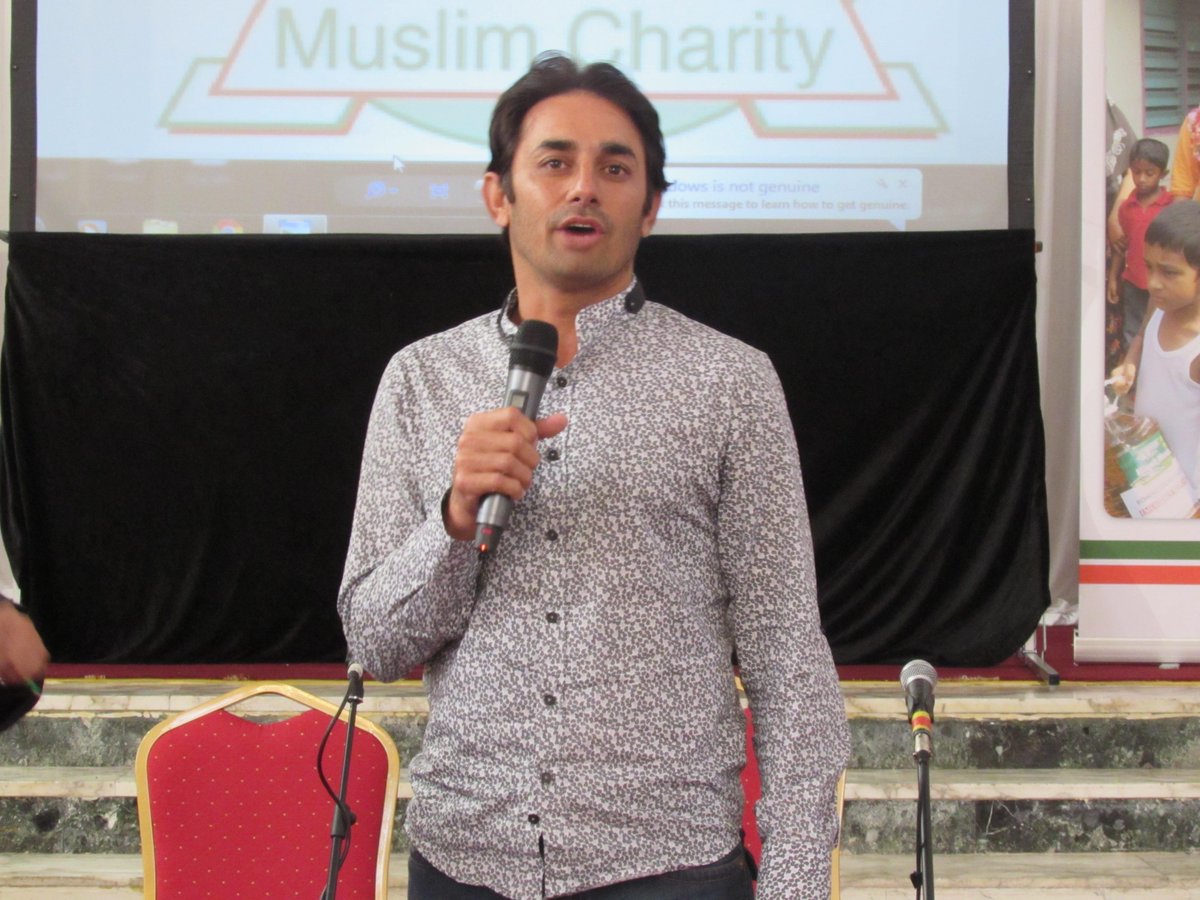
Saeed Ajmal raises £30,000 for Rohingya refugees

Source Dawn, 29 June

KARACHI: Pakistan's spin maestro Saeed Ajmal is in England playing county cricket to regain his lost rhythm with a remodeled action, but along with it the 37-year-old spinner is putting in special efforts to raise funds for displaced Rohingya refugees.

A fund-raising event for the Rohingya refugees was held in Manchester on Saturday, where Ajmal, who is playing for Worcestershire, was invited as the chief guest.

Read: Pakistan to provide $5m food grant to Rohingya camps

Saj Sadiq, editor of cricket portal PakPassion, who was present at the event, tweeted: "With the support [and] efforts of Saeed Ajmal, £30,000 was raised yesterday at the charity event for Rohingya refugees."

With the support & efforts of Saeed Ajmal, £30,000 was raised yesterday at the charity event for Rohingya refugees pic.twitter.com/1cWmEYMpnc

Embedded image permalink
5:29 AM - 28 Jun 2015 

In recent years, sectarian violence and a thicket of discriminatory laws against the Rohingya in Buddhist-majority Myanmar have sparked the region's largest exodus of boat-people since the Vietnam War.

Read: In Asian seas, Rohingya migrants have nowhere to land

According to the United Nations, more than 25,000 people, including many Rohingya but also economic migrants from Bangladesh, made the dangerous sea journey south from the Bay of Bengal between January and March this year.

An estimated 1.3 million Rohingya scratch out an existence in Rakhine, one of Myanmar's poorest states — tens of thousands are trapped in displacement camps, with conditions outside often worse.

Sunday, 28 June 2015

30 More Bodies Of Human Trafficking Victims Found In Wang Kelian Buried Today

Source Bernama, 29 June


POKOK SENA, June 29 (Bernama) -- The second batch of 30 remains of human trafficking victims, believed to be Rohingya migrants from Myanmar, found at Bukit Wang Burma, Wang Kelian last month, were buried at a cemetery in Kampung Tualang today.

Kedah Islamic Religious Department (JAIK) director Datuk Noh Dahya said 28 of the victims were men and they were buried en masse in a grave, while the bodies of two women were laid to rest in an adjacent grave.

The burial started at 3.50 am and ended at 5.30 am, he added.

He said there were still 55 remains of human trafficking victims undergoing post mortem process at the Sultanah Bahiyah Hospital, with 40 of them expected to be buried next week.

Last week, JAIK had buried 21 bodies of human trafficking victims which were found in Wang Kelian.

The burial was carried out by JAIK and the National Security Council with the assistance of local villagers, the police and members of the Kedah Rohingya Welfare Association.

Saturday, 27 June 2015

Myanmar govt officials involved in smuggling of Rohingyas: US

Source Dawn, 26 June

The Newspaper's Correspondent — Published about 2 hours ago

US State Department said Myanmar's governemnt and security officials smuggle thousands of Rohingyas, often for profit. —Reuters/File

WASHINGTON: The US State Department informed Congress on Thursday that Myanmar's Rohingya Muslims continue to face extrajudicial killings, deaths in police custody, rape, arbitrary detentions, torture and mistreatment in detention.

The department's country report on human rights also told US lawmakers that government and security officials, acting in conjunction with Rakhine and Rohingya criminal elements, smuggle thousands of Rohingyas out of the country, often for profit.

In Rakhine, the native state of the Rohingya, authorities require Muslims to obtain a permit to marry, a step not required of others.

Rohingya Muslims also overwhelmingly faced systematic denial of due process and fair trial rights, according to the report.

In July last year, the government disbanded the NaSaKa, a notorious security force responsible for gross human rights violations against Muslims. But security or government officials have not yet been investigated or held to account.

Prison conditions in Rakhine were among the worst, with reports of hundreds of Rohingya arbitrarily detained and denied due process, widespread mistreatment of detainees, and dozens of deaths in custody.

Authorities in Rakhine state made no meaningful efforts to help Rohingya and other Muslims displaced by violence to return to their homes and continued to enforce disproportionate restrictions on their movement, the report said.

As a result, tens of thousands of internally displaced persons remained confined in camps and were stopped by security forces from leaving in order to gain access to livelihood, markets, food, places of worship, and other services.

This policy further entrenched the increasingly permanent segregation of the Rohingya and Rakhine communities.

Published in Dawn, June 26th, 2015

Tuesday, 23 June 2015

Rohingya boy Ajis safe with adoptive parents in KL

Source Channelnewsasia, 23 June

Four-year-old Rohingya boy Ajis, who was sold for RM2,000 (about US$530) and smuggled across the border into Malaysia, is safe and well with his adoptive parents.

    Rohingya boy Mohamad Ajis. (Photo: Melissa Goh)

    KUALA LUMPUR: The story of four-year-old Rohingya boy Ajis, who miraculously turned up at the UNHCR office in Kuala Lumpur in May, has stunned many.

    Ajis who was travelling with his mother survived a treacherous journey across the Andaman Sea and mosquito-infested jungles in the Thai-Malaysia border, but sadly his mother did not.

    She died in one of transit camps run by smugglers, now known as death camps. After her death, Ajis was sold for RM2,000 (about US$530) and smuggled across the border into Malaysia.

    Now living in the outskirts of Kuala Lumpur with his adoptive parents, Ajis looked well. It was a relief because the recent disappearance of Ajis, who was said to have gone to stay with relatives, had triggered alarm bells.


    Aegile Fernandez, director of Tenaganita Women's Force, said: "We hear of so many stories of this kind of border sales - children brought all the way from Myanmar and kept at the border being sold to someone with the highest bidding.

    "Where did they get the money to buy the child? Survival is so tough in Malaysia - they are not allowed to work and they hardly have much money. Is the child to be taken to be resold? We don't know. It does happen because a lot of families are looking for children (they can adopt)."

    But Ajis' adoptive father Hamid Hussein said he would never give Ajis away or trade him for money.


    "I will not give him to anyone, he will stay with me until he grows up," said Hamid, a Rohingya refugee registered with the UNHCR.

    Hamid and his wife Fatimah already have two girls of their own, but Hamid is glad to be able to put a roof over their heads. However, working between odd jobs of driving garbage trucks, the money he earned is not going to be enough, he said.

    "With the money I earn, it's hard to support my family. All my money goes to children's expenses," he added,

    His priority, he said, is to get Ajis registered with UNHCR as soon as possible so that he is accorded some protection as a refugee and receive medical benefits and access to schooling. 

    Sunday, 21 June 2015

    “Rohingya Situation Statement on World Refugee Day” (19 June 2015)

    Source ABRO

    We, Australian Burmese Rohingya Organization (ABRO) would like to raise serious concern over ongoing humanitarian crisis of Rohingya and Kaman of Arakan state.

    For decades, Rohingyas have been oppressed, victimized, terrorized and forcefully expelled from homelands by the both government authorities and extremist Rakhine people. The campaigns of ethnic cleaning have been occurred in every power transition period of 1942, 1949, 1958-60, 1967, 1977-78, 1992 and latest 2012.1

    Because of they are non-Buddhist the problems uprooted again and again and remain unsolved.


    1942 campaign was led by Rakhine commissioner U Kyaw Khiang and instructed by Arakan state Tha-khin leaders after British forces handed the power to him. That caused total 294 Rohingyas villages destroyed, about 100,000 Rohingyas massacred and some 80,000 Rohingya uprooted to Raungpur refugee camp of Bangladesh.


    1949: was led by Burma Territorial Forces which unleashed a reign of terror in North Arakan under the director of U Kyaw Oo, the firebrand Rakhine Deputy Commissioner of Akyab district. This pogrom escalated killing of hundreds of people and burning several villages, thousands of Rohingyas were homeless and nearly 50,000 had fled to the East Pakistan (present Bangladesh) and India. .


    1958-60: 27 villages of Maungdaw northern side of Arakan State were uprooted by army led by Bo Tin Kyaw and drove the villagers into the then East Pakistan (present Bangladesh) and India. Later, the government reached the agreement to repatriate Rohigyas those fled However, those did manage to return were considered as illegal Pakistani immigrants and the properties and lands of all these refugees have been confiscated.


    1967: began with slaughtering some Rohingyas captured outside and looting properties and seizing lands Southern Arakan.


    1978: program was wide scope in Arakan and it degenerated into brutal abuses followed by arbitrary prosecutions, violences including rapes and vandalizing by both the army and local Rakhines.

    Within 3 months over 300,000 Rohingyas crossed into Bangladesh where about 200,000 Rohingyas took shelter in makeshift camps erected by Bangladeshi government.

    Most of them about 200,000 Rohingyans were forcefully repatriated after 9 months of arrival under the bilateral agreement singed on 9 July 1978. Half of those remained in Bangladesh travelled for other countries. The rest about 40,000 mostly women and children were died from illness and severe malnutrition after rations were cut to compel them to leave the refugee camps.

    Because of bilateral agreement which did not meet intl standard, Rohingyas had to languish again without land and recognition of their status, as well as, various restrictions engaged upon their return. They had been randomly settled within Maungdaw township and desperately languished there.


    By 1983, Gwa, Taungup, Tandwe and Ponnagyuan townships defined as muslim-free-zones by the government. It is tantamount to official killing license giving to Rakhines. Since then, muslims those captured in these regions are judged by Rakhine people. In this manner, hundred of muslims those found and captured in these regions were took over by Rakhine people and brutally killed.


    1991: operation was introduced with inhumane physical abuses, executions, rapes, tortures and prosecutions including forced labour to build barracks and bamboo fences, new roads and bridges, dig environmental ponds and scout sentininel.

    From May 1991 to the mid of 1992, about 270,000 Rohingya refugees were hosted in 20 refugee camps of Bangladesh.

    Under bilateral agreement was signed between GoM and GoB, forceful deportation started with the title of repatriation from 1992 September regardless of the refugees' dignity, rights and recognition guarantee.

    The first group of 15,000 Rohingyans repatriated by Dec 1992 and dozens were also killed in clashes for military unit's harshly intervention in deportation.

    Second time, the UNHCR achieved agreement with GoB and repatriated 35,000 Rohingyans by Nov 1993 that enabled to close 3 camps.

    Despite repatriated refugees turned back to Bangladesh, UNHCR upheld similar task and directly made agreement with GoM in order to repatriate large scale of remaining 190,000 Rohingya refugees with the date line- Dec 1995 and proclaimed that the situation in Arakan is conductive to return. As well as, Relief operations were suspended to compel refugees to leave the camps.

    Most of repatriated Rohingya refugees turned back the second time into Bangladesh but they never approach to refugee camp for fear of similar forceful deportation..


    From 8th June 2012, Total destruction across (13) different townships of Arakan state, reached at (97) mosques, about (23,000) houses from (95) villages. Death toll over 12,000 people and nearly 200,000 people displaced and number of arbitrary detention reached more than a thousand mainly from Maungdaw, Buthidaung and Sittwe townships. Despite the Thein Sein government of the so call 'civilian' has characterized the events as 'communal violence, the government's involvement and contributions into the crisis are very obvious;

    • Imposing Curfew and Order on to Rohingyas and Kamans and allowing Rakhine people freely to carry out various attacks, looting goods and cash and setting fires.

    • Allowing security forces to shoot the Rohingyas and Kamans, and not arresting a single armed Rakhine who are aggressively coming to attacks into Rohingya villages.

    • Seizing lands of Rohingyas which were burnt down and disposing them into concentration camps.

    • Blocking aid, rations and compelling to die from starvation and attacking aid workers.

    • Denial of the rights to have rights such as medicare, education, relocation, movement.

    • Thein Sein government asking the United Nation to relocate Rohingya in a third country.

    • Fabricating false news: the local Burmese news groups and anti-Rohingya bloggers reporting the way they like and playing a major role of bias through inciting anti-Rohingya propaganda and portraying Rohingyas as they want and providing reverse information.

    • Forcing to accept foreigner identity in the mid of humanitarian crisis. Rakhine RNDP party openly declared the bounty reward for every dead Rohingya. Forcing to sign the documents that describe as illegal immigrants that have no claim to Burmese citizenship.

    There are total about 200,000 Rohingya, Kaman and Rakhine muslims people involving about 75,000 children displaced (of whom about 175,000) have been forced into concentration camps and the rest about a million are also in appalling conditions under confinement and facing constant abuses from June 2012. Displaced people about (110,000) are in 13 to 15 camps of outside Sittwe (Akyab) city and the rest about (65,000) those from other 8 regions are in 26 camps where aid-workers unreachable. They ending up in the modern day concentration camps and enduring with confinement, constant abuses with lack of medi-care and food supply that causes to reach the death toll 7 to 20 people mostly children and elderly people per month.


     The government's massive contribution into violences in Rakhine State that later spread to other parts of Burma with the lead of ex-prisoner monk Wirathu. 

    1) Six areas of Mandalay regions attacked, destroyed about 3,500 houses plus several mosques and displaced about 15,000 Muslims and killing more than a hundred, including mass killing of 36 mostly teenagers in the small town of Meiktila on 20 Mar 2013.

    2) Attacks took placed across 8 townships of Pegu Regions but later most of those displaced were returned to their locations.

    3) Attacks in Sagaing Regions displaced about 320 people after a mob burned homes on 24 August 2013.

    4) Scattered attacks took placed in Yangon regions of Hlaing Tharyar, South Dagon, Tharkaytha townships. Arson attacks in Pebedan Madarasa killed 8 teachers and 28 students on 21 Mar 2013.

    5) In Magwe regions: A mosque, houses and belongings of 10 Muslims were demolished in Kanma Township on 13th April 2012.

    6) In Shan State: The attacks took place in Lashio destroyed the Myoma Mosque and estimated 5 Muslims have died and 30 houses were burnt down on the following day of Meiktila riot on 20 Mar 2013.

    7) Kachin state: Attacks in Saitaung of Phakant township destroyed a few muslims' houses and shops in the evening of about 2nd May 2013 .

    8) Chin state: A village of 17 families live in Paletwa township were also attacked by Rakhine gangs came from Rakhine state as a result of it's situated along the Kaladen River connected to Arkan.


    Barbaric actions of exclusion from national rights and Stripping of citizenship, looting properties and possessions, demolishing of historical existences and expulsion from their home lands by setting fire of houses, killing arbitrary and pushing into concentration camps and separation, forcing to become foreigner identity and driving into the sea, are very clear signs of genocide. The world's mechanism and its leaders must react immediately to save these people from such terror state. Without removal of dictatorships particularly from central posts and the establishment of rights base constitution, it is not marching for democracy nor, transition but big illusion one.


    Practically, it is not the 1982-citizenship laws that stripped off citizenship but the authority who are intentionally reluctant to access the Rohingya's historical existence and ancestral evidence that prove primary evidence earlier than prior to 1824 and also not allowing to recourse the citizenship under new citizenship act. The fact is that after British occupation of Arakan in1824, the repatriated Rohingya war victims of 1784 and 1794 Burman king invasion of Arkan, were miscounted as British era settlers by central rulers.

    Like in 1978 and 1992, after drove out of Rohingyans and Kamans from their ancestral homelands, the authorities tactically started collection of data and those forcefully repatriated under bilateral agreement were branded as Bengali so it could be accounted by exclusion of Rohingya into national census as a creation official evidence for national population history. Yet many new Burman scholars are relying on such fake resources.

    Following intl pressures, the authorities are also forcing the Rohingyas and Kamans to accept unusual identity which is different to usual citizenship card. This unusual card is different colour and has not description of race and religion and considering not a citizen. When the Rohingya in the camp refused to sign the documents, the authority threatened the Rohingya and Kaman victims that no signing would no aid ever made it through the blockades again including aid from foreign organizations. Therefore, the citizenship verification process will not be free and fair unless monitor by international community.


    It been more than 3 years on, the Rohingyas and Kamans of Arakan state (western Burma) are totally excluded from Burma and fell into the worst part of tragic like that happen over history; "APARTHEID, SLAVERY & RACISM, EXTERMINATION"..

    In many location, the Rakhine authorities just allow to pass the limited food items to them so only those unwanted food items were distributed. Aid workers are yet facing various restrictions and instant threats for providing aid and distribution of rations to Rohingya and Kaman victims.

    UN agencies and donor countries must ensure the food items to reach into the hands of victims. Meanwhile, the rations more than 100 bags of rice and other items with the brand mark of 'TIKA' donated by Turkey government were seized during Rakhine Insurgent members captured on 22nd of April 2015.2


    They can't wait any longer in such terror state and so about 10% of Rohingya and Kaman people involving women and kids have been fled into neighbouring countries from the beginning of violence, numbered about hundred thousand. Mostly fled into Bangladesh that includes about 2,000 of recent arrivals in Thai, Malaysia and Indonesian waters. We can't figure how many have been captured and killed within Burma territory, how many lost life in the sea, how many trapped by human traffickers, how many still fleeing and where they are.

    Recent raid on people smugglers in Southern Thailand and Northern Malaysia discovered the nearly 185 dead bodies mostly belong to Rohingya from several locations.


    Today, Rohingya become Burma's first refugees languished as unwanted in transit countries, numbering about; 40,000 Rohingyas including many in various slave labours in Thailand, 50,000 in Malaysia, more than 4,000 in Indonesia,

    21 according to JRS3, more than 300,000 Rohingya refugees including about 40,000 living in UNHCR runs overcrowded squalid refugee camps of Kutupalong and Nayapara in southern district of Cox's Bazar, about 1,500 Rohingya displaced in Hyderabad city came to appeared in India4, and about 500,000 arrived during 1942, 1978, 1992 and the majority living in Mecca's slums of (Naqqasha and Kudai) and Jeddah of Saudi Arabia.


    At the Oslo Conference to End Myanmar's Persecution of Rohingyas held at the Norwegian Nobel Institute on 26 May 2015,  has clearly indicated the elements of genocide.5

    Under the objective to transform a complete Buddhism state, the country rulers, their authorities and majority of the people jointly terrorising the Rohingyans and Kamans and expelling from homelands. This must be stopped immediately.

    Since the destruction, eradication and isolation and ban on livelihood and aid distribution of Rohingya victims are taking place, there is in need of militarily intervention and also for security and safety of the people it is required the UN to deploy peace keeping force and to take step to establish an independent state within Arkan state for these people.


    Despite the central government has quieten the 55 million of people for five decades and yet instant arrest taking place for those impose threat, the central government does not prevent ongoing vigilant attacks by radical monks and Buddhist people against muslims by picking up of a hoax news or created one and the authorities are readily permitting for various protests against UN agencies and racial instigation propaganda.

    Restriction and arrest of foreign journalists and corporal punishment of those speak to intl media or tourists. Activists, writers including non-Rohingyans like venerable monk Pinnyasiha and writter Htin Lin Oo who support Rohingya or speaking against racism, were jailed and ban from publicly speaking.


    Surprisingly again in neighbouring countries, people those fled from genocide have been pushed back, sentenced on their landing, letting to fall into the hand of traffickers. These are in deed a breaches of Customary Laws and non-refoulement Laws.

    Specially, the country Bangladesh has put the ban on aid distribution of Rohingya refugees in the camps and laws enforcement onto those live in rural areas. As well as, the arrests of individual aid workers and welfare workers. Moreover, the Bangladeshi government has planning to isolate Rohingya refugees by transferring to remote island. Such actions are inhumane and unacceptable even in religion norms. When the country Bangladesh itself rely on intl aid, it should not cut off of the other' aid.


    We also appeal the UNHCR in Bangladesh, Thailand, Malaysia and Indonesia to open the door for its refugees and recognize their plights, as well as, it must provide basic assistance and support for vulnerable groups such as elderly people, kids, single father/mother.

    Historically, Burma's minorities are continued to face vigilant attacks, extra-judicial killings, sexual abuses, arbitrary arrests and detention, inhumane tortures in every power transition period. The other hand, waging wars against Kachin, Karen, Shan and Chin minorities with disregard of cease-fire agreement.

    Kachin state: By February 2013, internally displaced persons about 35,000 in Myitkyina (two camps in Jan Mai Kaung) and Waingmaw (Thargaya and Lavoa camps). Another about 40,000displaced are in KIA/KIO-controlled areas. (while people fleeing into China is not counted into.)

    Chin state: Chin refugees seeking refuge in Delhi-India from the past decades and now living in tents left about 8,500 people.

    Shan state: There are about 125,000 Shan displaced living along China border and some of them crossed into China. Many people still escaping months ago from clashes between the armed groups and government soldiers.

    Karen and Mon states: More than 120,000 Karen, Kareni (Kayah) and some Mon people displaced internally.

    Another about 200,000 mainly Karen, Karenni and Mon refugees took refuge in Thai-Burma border refugee camps and most of them been there from the past three decades. By the end of year 2013, about 80,000 refugees are still living in 10 refugee camps.


    There are ongoing ethnic cleansing pogroms with the action of genocide and deprivation of rights. These are in deed a humanitarian disaster directly contributed by central government.

    The current Rohingya genocide in Burma is a case in which different forces in society and politics have converged to create, basically, a living hell for this particular group.

    Majority of Buddhist people believe Burma only belongs to them and democracy should only be available to them. Burmese rulers have continuously committing crimes against humanity and it has been over 3 years on, the government keeps the Arakan crisis alive in order to divert people' attention from democratization and election.


    Historically, such disaster could not ease by political dialogue or diplomatic engagement or simple sanctions. Despite aid and assistance very important for daily sustainable, and have been provided from around the world including Australia, such assistance is not a factor to solve the long running genocide of Rohingya.


    Base on facts finding from the past genocide fields, what happening to Rohingya is a virtue sign of genocide and crime against humanity. This should not be compromised by opening of a few illusion progress such as releasing political prisoners, media freedom chapter.


    We, ABRO therefore demand the following points;

    1) United Nation to mandate to put effective resolution onto Burma to ease the crisis as soon as possible end persecution against minorities.

    2) Britain, France, United States and its allies countries to use veto power to take appropriate action on to Burma rulers and military generals who committed crime against humanity and genocide.

    3) OIC and its leaders, ASEAN leader countries to continuously provide assistance on the ground in Arkan and rescue Rohingya boat-people from the sea.

    4) United Nation to protectorate the areas of where Rohingya and Kaman people living and deploy International Peace Keeping Forces on the ground and to emerge for establishment of an Independent State within Arakan State.

    5) United Nation agencies to exercise its power in distribution of aid to displaced victims of Rohingyans and Kamans on the ground and monitor citizenship verification process.

    6) UNCHR to open its registration for Rohingya refugee boat-people and recognize them as refugee and include equal number in resettlement quota.

    7) We also urge International Crisis Group to forfeit the Top Award prize given to Thein Sein in the end of 2012.


    Australia as a member of UNSC and signatory country to 1951 Refugee Convention, we Rohingya people in Australia kindly appeal to the Australian government to take part in taking action against Burma and its rulers and to give a hand to rescue Rohingya people from genocide and those from the sea.

    This is the statement of question about 3 million displaced people who suffer every moment for years on and their dreadful situation could not be enough to express by words. We therefore hopping that the world leaders would save our Rohingya and Kaman people from ongoing genocide and other displaced people of Chin, Kachin, Karen and Shan from other parts of Burma.


    3

    4

    5Myanmar's Genocide of Rohingya, Quintana, Penny Green and Zarni, at the Norwegian Nobel Institute in Oslo, Norway on 26 May 2015

    Japan offers $3.5M to help Rohingya boat people

    Source thedailystar, 20 June

    This picture taken on June 15, 2015 shows Myanmar Rohingya people waiting shortly after arriving at new temporary shelters for Rohingyas in Blang Adoe, North Aceh. AFP PHOTO / CHAIDEER MAHYUDDIN :Agence France Presse

    Tokyo: Japan on Saturday offered a $3.5 million to help the Rohingya boat people who have fled Myanmar where they faced severe discrimination.

    Foreign Minister Fumio Kishida said Japan remained committed to helping national reconciliation efforts on various fronts in Asia, including between Myanmar's government and "ethnic minority groups".

    "With regard to non-regular immigrants, including women and children trying to cross the Indian Ocean, Japan has decided to extend $3.5 million" through global agencies such as the U.N. High Commissioner for Refugees, he said in a public address.

    The money will go to providing food and shelter as well as to fund data analysis of their maritime movements, the foreign ministry said.

    The plight of the persecuted and impoverished Rohingya has drawn international attention as thousands of them and Bangladeshi migrants cram into boats and struggle desperately to reach other Southeast Asian countries.

    The Muslim Rohingya complain of systematic discrimination and mistreatment by Myanmar's Buddhist-majority government, which refuses to even recognise them as citizens.

    Thursday, 18 June 2015

    In Thai detention centers, female migrants remain in limbo

    Source Aljazeera, 17 June

    Thai authorities have refused to grant refugee status to hundreds of Rohingya who arrived through human traffickers.

    PHUKET, Thailand — Roshida was languishing in a squalid displaced people's camp in western Myanmar when an unfamiliar man offered her a job in a nearby city. Unemployed with two children, she immediately agreed. The next day, she was packed into the belly of a cargo ship anchored in the Bay of Bengal.

    "That's when I realized I had been sold," says Roshida, a 25-year-old ethnic Rohingya who only uses one name. She hasn't heard from either of her young children since.

    She found herself in an airless room full of desperate captives, including mothers clutching infants and frightened teenagers crying for their parents. Some had been abducted, she says, while others had been promised jobs or arranged marriages in Malaysia. The boat lingered for several weeks near Rakhine state in western Myanmar, gathering about 400 people, mostly other Rohingya Muslims — a persecuted ethnic group from Myanmar — and Bangladeshis, before setting sail for Thailand. Passengers each received one cup of water and a scoop of rice daily. A Bangladeshi man who begged for water one morning was beaten to death and tossed overboard.

    "When I was on the boat, I was crying. I missed my kids," recalls Roshida, now staying at a shelter in southern Thailand. "They told me, 'If you cry, I will beat you and throw your body into the sea.'"

    She is one of thousands of people exploited by a flourishing human trafficking network that transports desperate and often unwilling Rohingyas and Bangladeshis to Malaysia through Thailand. Over 25,000 people have embarked on the perilous journey since the start of this year, with hundreds dying en route, according to the U.N. High Commissioner for Refugees (UNHCR). Most new arrivals are held in transit camps in Thailand's Ranong and Phang Nga provinces before they are stuffed into trucks heading for the border with Malaysia.

    For several weeks, Roshida was confined to a collapsing bamboo hut draped in muddy tarps somewhere in the jungles of Thailand's Songkhla province. Once there, the brokers demanded $1,600 to release her in Malaysia.

    hut, trafficking camp, Phang Nga province, Thailand.

    A hut in an abandoned trafficking camp in Phang Nga province, Thailand. Hanna Hindstrom

    "I told them, 'You lied to me! I don't have any money.' So they burned me with cigarettes, and they beat me," she says, lifting her dress to reveal dark scars on her feet.

    In less than a month, three people died from disease, she says, and women became the targets of verbal abuse and sexual violence.

    "Smugglers would take young girls who looked attractive away into the forest nearby," she says. ""[The girls] refused to talk about it when they came back."

    Fearing for her life, Roshida tried to escape three times. Twice she was captured by locals and returned to her traffickers. Each time she was sent back, they shackled her and beat her with wooden rods. On her third attempt, she ran into a Thai couple on a rubber plantation. They called the police.

    But her ordeal didn't end there. Instead of helping her, Thai authorities accused her of entering the country illegally and jailed her for three months. In April she was finally transferred to a shelter for women and children. Now she is anxiously waiting for news about her children back in Sittwe, Myanmar.

    Monitoring groups say a growing number of boat arrivals are being trafficked, coerced or misled by unscrupulous brokers. Members of Myanmar's persecuted Rohingya minority, who are denied citizenship and heavily ostracized in the Buddhist-majority country, are easy targets. Over 140,000 people are confined to official displacement camps in Rakhine, where they are unable to travel freely or secure decent work. Nearly 10 percent of the roughly 1 million Rohingya in Myanmar are estimated to have fled since a surge in violence between Buddhists and Muslims began in 2012.

    "I owned a small shop in Sittwe, but everything was burned," says Roshida. "My husband turned to alcohol. I lost everything — my house, my business."

    Treating victims as criminals

    In 2014 the U.S. State Department downgraded Thailand to the lowest possible rating in its annual "Trafficking in Persons"report, citing accounts of Thai police and army officials cooperating with smuggling rings. Though the Thai government has shown little sympathy for boat people, choosing to treat new arrivals as criminals rather than victims or refugees, officials escalated their crackdown on human traffickers in May after uncovering a patchwork of mass graves scattered across southern Thailand.

    Since then, Thailand has arrested about 80 people, including police officers and Interior Ministry personnel, on suspicion of complicity with human trafficking. But only one army official was among them, raising concerns that the Thai military junta — which seized power in a coup last year — is reluctant to target its brass. No one has been arrested in Phang Nga, a hub for trafficking, even though local volunteers are maintaining a 24-hour road checkpoint along a crucial transit route.

    Thailand's crackdown has had a disastrous effect on victims. Thousands of people were cast adrift in the Andaman Sea after traffickers abandoned their ships and fled into hiding. Still, Thailand has steadfastly refused to open its borders to unwanted arrivals, opting to push boats back from shore. If they make it to land, men, who constitute the majority of boat people, are held in detention centers or prisons, while women, minors and those identified as trafficking survivors are mostly housed in shelters. Until March, Rohingyas were routinely deported to Myanmar. About 500 to 700 Rohingyas are estimated to remain in Thailand.

    Andaman, Rohingya

    Rohingya migrants swim to collect food supplies dropped by a Thai army helicopter after they jumped from a boat drifting in Thai waters off the southern island of Koh Lipe in the Andaman Sea. Christophe Archambault / AFP / Getty Images

     Trafficking victims have more rights than people who have been smuggled, according to Matthew Smith, the executive director at Fortify Rights, which is why "certain governments have been loath to consider these abuses in the context of trafficking." The problem, he said, is particularly acute in Thailand, where "authorities have consistently underestimated the number of survivors of trafficking."

    Yet the Thai government insists that trafficking victims are processed in accordance with international standards. The governor of Phang Nga, Prayoon Rattanaseri, says that his province is a "role model" for victim protection and has identified over 150 trafficking survivors since last year. He blames language barriers and a dearth of Rohingya interpreters for any mistakes in registering victims.

    At Roshida's shelter, only two of the 79 people there have been classified as trafficking victims. Both are Bangladeshi. One of them is Hassan, a 22-year-old from Dhaka who was drugged and abducted in Teknaf in southern Bangladesh last year. He recently testified in Thailand's first major case against human traffickers operating in the Andaman Sea. Unlike many other arrivals, Hassan has been able to earn a modest living working on a nearby rubber plantation.

    Stuck in the middle

    In late May, Thailand hosted a regional meeting to address the burgeoning boat crisis, with officials pledging to boosthumanitarian access for the UNHCR and the International Organization for Migration (IOM). But critics say Thailand, which has not signed the U.N. refugee convention, has been reluctant to fulfill its promises. U.N. agencies still have only restricted access to Rohingya boat arrivals, many of whom are kept in cramped detention cells without access to trauma counselors, proper health care or refugee status determination.

    "[Thailand] must allow UNHCR to have unconditional access to do refugee status determination interviews and recognize the results," says Phil Robertson, the deputy Asia director at Human Rights Watch. "Second, it should permit IOM to be directly involved in trafficking victim identification assessments and provide appropriate care for all those recognized as victims."

    <img src="/content/ajam/articles/2015/6/17/In-thai-detention-centers-migrants-stuck-in-limbo/_jcr_content/mainpar/textimage_0/image.adapt.480.low.thailand_refugees.jpg" alt="Andaman Sea, Rohingya, Thailand" class="">
     

    Andaman Sea, Rohingya, Thailand

    Rohingya migrants pass food supplies dropped by a Thai army helicopter to others aboard a boat drifting in Thai waters off the Andaman Sea.Christophe Archambault / AFP / Getty Images

     Only a "small handful" of Rohingyas qualify for resettlement abroad, according to Vivian Tan, the UNHCR's spokeswoman in Bangkok, and these are the most vulnerable refugees, such as unaccompanied minors and women with young children. One of them is Abdul, a 13-year-old who was abducted from his dinghy near Sittwe last November.

    "If I had wings, I would fly home right now," says Abdul, who has been stateless his entire life. He is now staying at a shelter in southern Thailand.

    The United States has urged Myanmar to provide citizenship and rights to the Rohingya in order to stem the exodus. But officials have refused to budge, insisting that the Rohingyas arrived illegally from Bangladesh.

    As a result, the vast majority of Rohingyas trapped in Thailand want to continue their journeys to Malaysia, fueling concerns that they will end up back in the clutches of smugglers and traffickers. Several women in Thai shelters are simply waiting in the hope that international agencies can help them join their husbands in Malaysia, with no idea of what to do if they can't. It is not uncommon for children and women to simply vanish from shelters despite being shortlisted for resettlement in the United States.

    Although Thailand's crackdown has forced most smugglers into hiding, activists say it is only a matter of time before they return.

    "The risk [of retrafficking] is certainly there," says Tan. "We've been quite concerned about reports of brokers approaching women and children in shelters. When we talk to survivors in Malaysia and Indonesia, we've learned that people who manage to leave detention centers [in Thailand] usually end up back in the arms of smugglers."

    Roshida's only hope is that she can reach the United States and her children can join her.

    "If I head back to Rakhine, I head back to death," she says. "There's no point going back there."


    Friday, 12 June 2015

    Dr M calls for Myanmar to be expelled from Asean

    Source Thestar, 12 June


    - Bernama

    - Bernama

    KUALA LUMPUR:  It would be better for Myanmar to be excluded from Asean as genocide is unacceptable, says Tun Dr Mahathir Mohamad.

    The former prime minister urged Asean as well as the United Nations to take action against Myanmar.

    "Countries like this only give a bad name to us. So, if you want to commit genocide, leave Asean," he said.

    "Myanmar has not responded to requests to be more humane, instead they continue merciless killing of people, and this should not be the case," he said while delivering his keynote speech at the International Conference themed 'Plight of the Rohingya,  crime against humanity'.

    He added that the United Nations should be asked to do something about it.

    "Although they are not capable of doing anything, we need to push for it. I even wrote a letter to Aung Sang Suu Kyi on this matter, but there has been no response, so the fate of the people there needs to be defended from the outside," he said.

    While emphasising that the boat people situation would not have existed if not for Myanmar, Dr Mahathir added that the 'no interference' policy has limitations which have now been breached by Myanmar.

    "If it is a matter of political matters, then yes, it is acceptable, but there should be a limit to what constitutes non-interference.

    " Although it is internal, the killing of people should not be tolerated, they should not have the right to treat people that way," he said, adding that Malaysia just stood by and did nothing when two million people were killed in Cambodia.

    "These people have been a part of the country for 800 years,"  said Dr Mahathir, adding that the law prohibits countries from expelling people.

    He added that he had a lot of respect for Buddhism because it preached peace.

    "But here, these peace-loving people are perpetrating horrible atrocities. They burn homes and kill people.

    "They are committing something that is prohibited by their religion or any religion for that matter," he said.


    Wednesday, 10 June 2015

    NA passes resolution condemning genocide of Rohingya Muslims

    Source The express tribune, 10 June

    Resolu­tion calls upon the United Nation­s to interv­ene to stop human rights violat­ions in Myanma­r


    Rohingya migrants. PHOTO: REUTERS
    Rohingya migrants. PHOTO: REUTERS

    ISLAMABAD: The National Assembly on Wednesday passed a resolution expressing deep concerns over the heinous crimes being committed by religious extremists against the Rohingya Muslims in Myanmar, Radio Pakistan reported.

    The resolution moved by Minister for Defence Production Rana Tanveer Hussain strongly condemned the genocide of Rohingya Muslims and called upon the United Nations to intervene to stop human rights violations there.

    Appreciating the government of Pakistan for raising the issue with the UN Secretary General, the resolution called upon the government to impress upon the Myanmar government for the protection of human rights of the peaceful community of Rohingya Muslims. The resolution also called upon the OIC to deliberate the issue and take necessary action in the matter.

    The resolution commended the courage of Rohingya Muslims who are bravely facing the genocidal campaign against them.

    Read: PM formed special committee on relief efforts for Rohingya Muslims: Nisar

    As a key member of the OIC, Pakistan is going to write to United Nations Secretary General Ban Ki-moon as well as the United Nations Security Council president to ask them for further intensification of diplomatic and moral pressure on Myanmar to grant citizenship rights to Rohingyas in accordance with international humanitarian laws.

    This was one of the many recommendations of a three-member cabinet committee that Prime Minister Nawaz Sharif approvedon Tuesday.

    Read: Pakistan approves $5m for Rohingyas, but wants UN, OIC to take notice of migrant's plight

    The committee – headed by Interior Minister Chaudhry Nisar Ali Khan and comprising the PM's Adviser on Foreign Affairs and National Security Sartaj Aziz and the PM's Special Assistant on Foreign Affairs Tariq Fatemi – was formed by the PM last week to deliberate on the issue of Rohingya Muslims.

    The committee has also decided that a special grant of US$ 05 million should be announced as Pakistan's contribution towards plight of Rohingyas. This grant will be channeled in the form of food through the World Food Programme for distribution in Rohingyas' camps in Indonesia, Malaysia and Thailand.

    Tuesday, 9 June 2015

    Protection centre in Padang Besar to hold Rohingya

    Source Therakyatpost, 8 June

    Migrant-boat-indonesia-may-reuters-940x470

    MICHAEL MURTY By: Michael Murty

    Padang Besar Member of Parliament Datuk Zahidi Zainul Abidin says talks are ongoing to transfer power to handle Rohingya refugees to the National Security Council. – Reuters/Antara Foto pic

    KUALA LUMPUR, June 8, 2015:

    According to Padang Besar Member of Parliament Datuk Zahidi Zainul Abidin, the issue of Rohingya entering the country should be handled by National Security Council (MKN) and not the Home Ministry.

    He said there were ongoing talks on transfer of power so the matter could be handled better and there were plans by MKN to build a protection centre in his constituency to deal with the refugees from Myanmar.

    "When these people enter the country, we can hold them there. This place can act as a holding centre for them," he told The Rakyat Post when met in Parliament.

    He said the next thing Malaysia must do is pressure Myanmar to stop persecuting the Rohingya in their country.

    "We must do this through Asean and OIC (Organisation of Islamic Cooperation) and pressure the country to stop persecuting the group.

    "If this is not done, the persecution against them will not stop."

    When asked if there were any leads from pathology reports on the remains taken from Bukit Wang Burma, near Kampung Wang Kelian, in Perlis, he said "not yet".

    However, he was not ruling out the rumoured organ trade activity that might have taken place.

    "We suspected that as well. Some doctors have even indicated that the bodies were infected with H1N1 and other diseases."

    Talking about working together with the United Nations High Commissioner for Refugees (UNHCR), he said it was true that UNHCR had come to speak to the government many times, but it was to ask for the right for these Rohingyas to work in the country.

    "The government is still mulling this matter as well as other solutions.

    "We are hoping UNHCR will play a role as a body from the United Nations (UN) to figure out ways to stop the Rohingya from fleeing the country.

    "We hope to work closely with UNHCR to pressure Myanmar to stop persecuting these people."

    He said after the UNHCR gives these people cards, it often washes its hands off them and the government has then to step in.

    "They should help them in terms of food and shelter."

    He said he would meet with a group of non-governmental organisations (NGOs) as well as Malaysian Rohingya groups next week to discuss methods to obtain funds for Rohingyas.

    "We will meet and figure out ways to get these people recognised as people of Arakan, Myanmar."