Friday, 15 October 2021

Myanmar's genocide bleached as 'ethnic cleansing'

Source English, 29 Aug

The West's liberal democratic regimes - in this case the Anglo-American governments - manipulate the principles of human rights and international treaties such as the Convention on the Prevention and Punishment of the Crime of Genocide to suit their geopolitical and corporate interests

I was shocked and deeply repulsed beyond words to witness the apparent coordinated attempts by the administrations of Boris Johnson and Joe Biden at bleaching Myanmar's international legal crime of genocide on the very day Rohingya survivors around the world have come to recognise as Genocide Remembrance Day.

While the British Embassy @UK-in-Myanmar was busy tweeting "Today marks the 4th anniversary since the military's committed ethnic cleansing against the Rohingya," the US State Department issued a press statement, entitled "Marking the 4th Anniversary of Ethnic Cleansing in Rakhine State". The American version of spin begins with the opening sentence, "Four years ago, Burma's military launched a horrific ethnic cleansing against Rohingya in northern Rakhine State."

Advertisement
Advertisement

In a different moral universe where rights activists such as myself and dozens of scholars and activists firmly anchor ourselves, human rights are lived principles. International crime codes like the Genocide Convention are lived law.

The West's liberal democratic regimes - in this case the Anglo-American governments - manipulate the principles of human rights and international treaties such as the Convention on the Prevention and Punishment of the Crime of Genocide to suit their geopolitical and corporate interests.

The Johnson and Biden regimes have added insult to the injury of several million Rohingya survivors

For the Americans, the Myanmar genocide is viewed through its paranoid prism that Beijing is dislodging the US as the global hegemon.

Post-Brexit Britain is chiefly concerned about maintaining its market access and shoring up corporate profits in emerging markets, however evil their business partners may be as evidenced in the Independent's headlines "European allies are alarmed by the UK's 'de facto recognition' of the Myanmar junta by sending a new British envoy" two days ago.

Advertisement

But even my 30 years of international human rights activism did not prepare me for the level of moral depravity to which American and British policy-makers are prepared to sink. Washington and London in effect denied and dismissed the crime of genocide on the very day Rohingya have set aside each year to mourn their dead families and friends, and burning of their villages and destruction of their way of life. Blindly the two great powers throw humanitarian crumbs at the survivors who live in sub-human conditions in Bangladesh and Myanmar.

By misnaming Rohingya genocide as "ethnic cleansing," they employ the favourite euphemism for genocide invented by the Serbian genocidal leader Slobodan Milošević. The Johnson and Biden regimes have added insult to the injury of several million Rohingya survivors. The survivors are trapped in refugee and IDP camps and in diaspora dislocation. They drown when their boats are driven back out to sea by the navies of governments like Bangladesh, India, Thailand, Malaysia, and Indonesia.

UK and US leaders, both Democrats and Republicans, routinely use the morally loaded term "genocide," to score points against their enemies, such as China, Libya, or Syria. But Washington and London now seem to coordinate their Milosevicesque use of the term "ethnic cleansing," dismissing the Rohingya demand that they call a spade a spade, a genocide a genocide.

The Biden administration's refusal to officially recognize Myanmar's intentional physical destruction of Rohingyas as "genocide," as defined by the Genocide Convention, stands in sharp contrast with the overwhelming recognition and condemnation of Myanmar's crime of genocide by the US Congress.

US Senator Bob Menendez (D-NJ) and Representative Gregory W Meeks (D-NY-5), the two leading lawmakers, who chair the US Senate Foreign Relations Committee and the House of Representatives Foreign Affairs Committee respectively, have publicly pressed US President Joe Biden "to make a formal determination that these crimes (against Rohingya) constitute genocide." On the day of commemoration of the Rohingya genocide, Gregory Stanton, former State Department official and the world's foremost legal and anthropological scholar of genocide – trained at Yale Law and the University of Chicago – read his poem "What is justice?", at the Free Rohingya Coalition Genocide Memorial Event on 25 August. He asked pointedly, "What is justice for a lawyer who still won't call it genocide?"

In his forthcoming publication, entitled '"Ethnic Cleansing" is a Euphemism Used for Genocide Denial,' Stanton argues persuasively that "ethnic cleansing" is tantamount to genocide denial.

As used by Milošević, the press, the UN, and many governmental policy makers, the term "ethnic cleansing" is used to avoid using the word "genocide." "Ethnic cleansing" has become a euphemism used for genocide denial.

In Stanton's scathing words of indictment: "The UN, press, human rights groups, and many governments still call the Myanmar Army's aggression, genocidal massacres, and forced deportation against the Rohingya "ethnic cleansing." "Ethnic cleansing" is a term invented by Slobodan Milošević and Serbian propagandists as a euphemism for forced deportation and genocide.

"Ethnic cleansing" in common usage means forced deportation. But unlike the crime against humanity of deportation or forcible transfer of population, and the crime of genocide, it is not a term that appears in the Rome Statute of the International Criminal Court. It has no legal meaning in international law. There is no treaty outlawing it. No national legal codes prohibit "ethnic cleansing." No prosecutor can charge anyone for committing it. The term is a license for impunity.

As used by Milošević, the press, the UN, and many governmental policy makers, the term "ethnic cleansing" is used to avoid using the word "genocide." "Ethnic cleansing" has become a euphemism used for genocide denial. Because Article 1 of the Genocide Convention implies the obligation to act to prevent genocide, avoiding use of the term "genocide" has the same practical outcome as genocide denial. Users of the term "ethnic cleansing"—like genocide deniers—are freed from their duty to prevent or stop genocide."

At the same FRC Genocide Memorial Event, Dr Katherine Southwick, another Yale-trained American legal scholar who warned of genocide against the Rohingya as early as 2014, vented her frustration. Southwick said to the Facebook LIVE audience of 20,000+ viewers on Wednesday, "so with frustration with the international community's own lack of accountability, yet with hope and gratitude, the international community must do nothing less than acknowledge genocide and renew our solidarity and support for the Rohingya and equal rights for all in Myanmar."

Advertisement

Taking a non-legal perspective, Gayatri Chakravorty Spivak, the leading scholar of post-colonial studies and University Professor in the Humanities at Columbia University in New York, was emphatic with her demand for legal acknowledgment of genocide – which Rohingya have long been subjected to – when she invoked "common sense".
Also Read

Genocide in a shared death

Suffering etched on the faces of little Rohingya children driven from their country. Picture taken at the Balukhali camp

The Indian scholar told the worldwide audience at the FRC Genocide Memorial Facebook LIVE yesterday thus: "I want to speak to my Rohingya brothers and sisters and talk to them about a possible future. It is the unacknowledged genocide that has made it impossible for me to do what I want to do today. I don't think our conscience needs to go to legal definitions to acknowledge that a Rohingya is killed simply because she is a Rohingya. By common sense, that is genocide. But we must have an international legal acknowledgment in order for the possibility of legal redress to begin."

Rohingya – and their international friends – worldwide mourned the mass-death and destruction of numerous victims raped, maimed, slaughtered, and genocidally murdered – and lamented the absence of any effective acts by the "abstract international community" – to borrow Spivak's coinage.

On the same day, General Sadat, a US-trained commander in the Afghan National Army, was writing in the New York Times, with justified anger towards the US government for having abandoned the Afghan people. (The Afghan Army Collapsed Against the Taliban. Here's Why. - The New York Times) General Sadat writes, "I am exhausted. I am frustrated. And I am angry. President Biden said last week that 'American troops cannot and should not be fighting in a war and dying in a war that Afghan forces are not willing to fight for themselves.' It's true that the Afghan Army lost its will to fight. But that's because of the growing sense of abandonment by our American partners and the disrespect and disloyalty reflected in Mr. Biden's tone and words over the past few months."

The betrayal and a palpable sense of abandonment that the wretched of the earth who struggle for their right to life and liberty have felt towards the liberal West in general and the US in particular, with US signature honey-tongued support for human rights and "the rule-based international order," is nothing new.

In the early years of the Cold War, after having made promises of solidarity which they never intended to keep, the US and western allies abandoned thousands of Hungarian rights activists in the wintery month of November 1956.

Almost 20 years ago, Matthew Daley, then serving as the Deputy Assistant Secretary of State in the Bureau of East Asian Affairs at the US State Department, met with me in his office in Washington, DC. Daley pointedly warned me against trusting and relying on the US government for the Burmese liberation struggle.

"My government's Burma policy is unconscionable. We made empty promises to the Hungarian democrats in 1956. Then when they were slaughtered (by the Soviets), we did nothing. So, you Burmese must find your own solutions."

The ugly truth is Western and Eastern birds of the same feather flock together in the UN Security Council, where they take turns denying their own war crimes, crimes against humanity, and genocides, and where they flout international treaty obligations that conflict with their national interests
Advertisement

But it's one thing for the US and its British poodle to abandon dissidents worldwide against corrupt and brutal regimes, be they Hungarians, South Vietnamese or, pro-human rights and anti-Taliban Afghan people. It is another moral low for British and American foreign ministries to coordinate their statements of genocidal denial as they did on the 4th anniversary of "ethnic cleansing" in Rakhine State.

Ten years ago, my research colleague and partner Natalie Brinham (writing under the pen name Alice Cowley), and I conducted a 3-year path-breaking study based on hundreds of interviews with Rohingya survivors in Malaysia, India, Bangladesh, Saudi Arabia and Myanmar. We reached the unequivocal conclusion that Myanmar has institutionalised the intentional physical destruction of its Rohingya minority. The genocidal process started with the destruction of their group identity and denial of their history in Burma centuries before Burma or Myanmar came into existence in 1948. We published our findings as a commissioned peer-reviewed article entitled "The Slow-Burning Genocide of Myanmar's Rohingya" in the Pacific Rim Law and Policy Journal of the University of Washington School of Law in the spring of 2014.

The Public International Law and Policy Group (PILPG) was the Washington law firm that the US State Department hired to conduct a forensic investigation of crimes against the Rohingya, using a representative sample of 1,000 Rohingya survivors in Bangladesh in 2017. When the State Department refused to use the term "genocide" in the official State Department report of the findings, PILPG went public with its genocide findings.

PILPG's Paul Williams told a press conference in Washington in 2018, "It is clear from our intense legal review that there is, in fact, a legal basis to conclude that the Rohingya were the victims of war crimes, crimes against humanity and genocide." But the Trump Administration decided to shelve its own commissioned report, when the findings did not suit the US government's agenda.

British politicians were no more receptive of facts and findings about the Myanmar genocide, according to Queen Mary University of London Professor Penny Green, whose International State Crime Initiative, documented the evidence of the genocide in 'Countdown to Annihilation: Genocide in Myanmar' (2015). She spoke on the FRC Genocide Memorial Event on Facebook LIVE this week.

It is no wonder that the Taliban, the Xis and the Putins of the world, and rogue regimes everywhere pay no attention to Anglo-American joint statements that bark about democracy, human rights, and the rule of law. Nor do these rogue regimes think twice before they commit mass atrocities.

The ugly truth is Western and Eastern birds of the same feather flock together in the UN Security Council, where they take turns denying their own war crimes, crimes against humanity, and genocides, and where they flout international treaty obligations that conflict with their national interests.

Those in high offices who have been entrusted to ensure the peace, security and well-being of humanity have turned out to be the worst enemies of "We the People."

* Maung Zarni is a co-founder and Burmese coordinator of the Free Rohingya Coalition and an advisor to the Genocide Watch



Tuesday, 28 September 2021

U.S. court orders Facebook to release anti-Rohingya content records for genocide case

Source Reuters, 23 Sept

Sept 23 (Reuters) - A U.S. federal judge has ordered Facebook (FB.O) to release records of accounts connected to anti-Rohingya violence in Myanmar that the social media giant had shut down, rejecting its argument about protecting privacy as "rich with irony".

The judge in Washington, D.C, on Wednesday criticized Facebook for failing to hand over information to investigators seeking to prosecute the country for international crimes against the Muslim minority Rohingya, according to a copy of the ruling.

Facebook had refused to release the data, saying it would violate a U.S. law barring electronic communication services from disclosing users' communications.

But the judge said the posts, which were deleted, would not be covered under the law and not sharing the content would "compound the tragedy that has befallen the Rohingya".

"Facebook taking up the mantle of privacy rights is rich with irony. News sites have entire sections dedicated to Facebook's sordid history of privacy scandals," he wrote.

A spokesperson for Facebook said the company was reviewing the decision and that it had already made "voluntary, lawful disclosures" to another U.N. body, the Independent Investigative Mechanism for Myanmar.

More than 730,000 Rohingya Muslims fled Myanmar's Rakhine state in August 2017 after a military crackdown that refugees said including mass killings and rape. Rights groups documented killings of civilians and burning of villages.

Myanmar authorities say they were battling an insurgency and deny carrying out systematic atrocities.

1/2

A Facebook logo is displayed on a smartphone in this illustration taken January 6, 2020. REUTERS/Dado Ruvic/Illustration

The crackdown by the army, during the rule of Nobel laureate Aung San Suu Kyi's civilian government, did not generate much outcry in the Buddhist-majority nation, where the Rohingya are widely derided as illegal immigrants from Bangladesh.

Gambia wants the data for a case against Myanmar it is pursuing at the International Court of Justice (ICJ) in the Hague, accusing Myanmar of violating the 1948 U.N. Convention on Genocide.

In 2018, U.N. human rights investigators said Facebook had played a key role in spreading hate speech that fueled the violence.

Reuters investigation that year found more than 1,000 examples of hate speech on Facebook, including calling Rohingya and other Muslims dogs, maggots and rapists, suggesting they be fed to pigs, and urging they be shot or exterminated.

Facebook said at the time it had been "too slow to prevent misinformation and hate" in Myanmar.

In Wednesday's ruling, U.S. magistrate judge Zia M. Faruqui said Facebook had taken a first step by deleting "the content that fueled a genocide" but had "stumbled" by not sharing it.

"A surgeon that excises a tumor does not merely throw it in the trash. She seeks a pathology report to identify the disease," he said.

"Locking away the requested content would be throwing away the opportunity to understand how disinformation begat genocide of the Rohingya and would foreclose a reckoning at the ICJ."

Shannon Raj Singh, human rights counsel at Twitter (TWTR.N), called the decision "momentous" and "one of the foremost examples of the relevance of social media to modern atrocity prevention & response".

Reporting by Poppy Elena McPherson; Editing by Martin Petty

Myanmar military junta releases vitriolic Buddhist Monk, Ashin Wirathu

Source TheChinDwin, 15 Sept

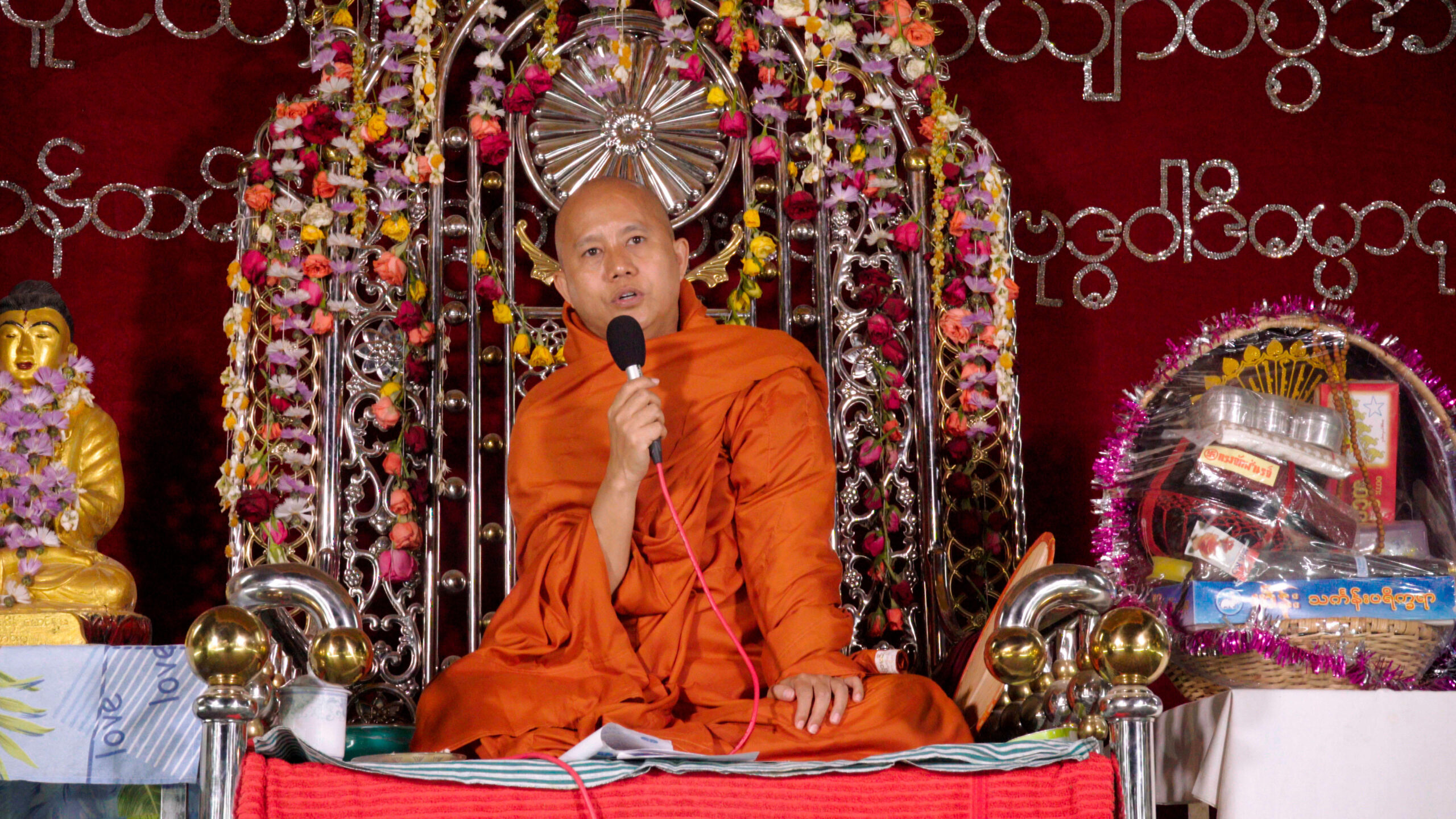
LE VENERABLE W., (aka THE VENERABLE W.), Ashin Wirathu, 2017. © Les Films du Losange /Courtesy Everett Collection

Yangon (Chindwin): Myanmar's military junta has released Ashin Wirathu, notorious for his hate speech against Muslims, after the sedition charges against Wirathu were dismissed by the junta. The reason why his case is dropped is not given.

The ultranationalist Buddhist monk became prominent in 2012 after sectarian violence broke out between Buddhists and Rohinya Muslims in the state of Rakhine. The release of Wirathu was confirmed by the junta's spokesperson Maj. Gen. Zaw Min Tun, in an interview with the People Media – an online news site on Sept 07, adding that Wirathu is receiving medical treatment at Tatmadaw [military] hospital.

The fundamentalist Buddhist monk is a mastermind of the 969 movement, founding leaders of the Far-Eastern-origin religion, and openly campaign for anti-Muslim movement instigating hatred against Myanmar's Muslims and Rohingya minority group.

State Sangha Maha Nayaka Committee banned 696 for their extremism in 2013. Soon after, Ma Ba Tha, the Protection of Race and Religion organisation, emerged quickly into Myanmar's political scene spotlight. Their objectives are to defend Buddhist Myanmar from alleged Islamization.

Ma Ba Tha key figures were once giving sermons urging their followers not to marry people carrying Islamic faith and boycott Muslim-owned businesses claiming that the country has been under threat by Islamization. Their movement aimed at isolating Muslims and limiting their civil rights.

At one point, Wirathu and his allies were successful in lobbying for laws making interfaith marriages difficult.

Mr Wirathu strongly supported former President Thein Sein's plan to exile Rohinya Muslims from Myanmar and participated in the anti-Muslim rally. He was labelled as the Buddhist Terror by TIME magazine in 2013 and caught global attention.

Controversial though he is, Wirathu has large followers who share his ultra-nationalistic views, not accepting Muslim minorities and limiting their civil rights.

In the past, Wirathu likened State Counsellor Daw Aung San Suu Gyi as a prostitute and former UN Special envoy to Myanmar as bitch and whore. He turned himself in for arrest in November last year from his hiding. He ran away from public sight since Yangon Region Government brought the charge against him for remarks made in early 2019, which included Aung San Suu Gyi's insults was the de facto leader of Myanmar.

Facebook shuttered Wirathu's account in 2018 owing to his hate speech against Muslims. 

Rumours suggested earlier that Wirathu might not be released even though he is now under the control of the military junta because the plaintiff who brought the case against him to court is not an individual but the regional government. However, Wirathu appears to have a close relationship with the military top brass as all speculations about his fate are wrong. Instead, he is now free and receiving medical treatment in Tatmadaw [military] hospital, which ordinary citizens cannot have such privilege.

Back in May, the anti-Muslim nationalist monk also complained about his treatment in prison under the military junta.

Myanmar shadow government declares war on military junta, escalating crisis

Source Washintonpost,  7 Sept

Soldiers stand next to military vehicles in Yangon, Myanmar's largest city, on Feb. 15 as people gather to protest the military coup. (Reuters)

Myanmar's security crisis deepened Tuesday when its shadow government, which is allied with ousted leader Aung San Suu Kyi, called for an armed revolt against the ruling military junta, sparking an escalation of fighting in parts of the country.

The declaration sets the stage for a further unraveling in the crisis-hit Southeast Asian country, where the military has violently cracked down on protesters since it seized power in February. More than 1,000 have been killed by security forces, and dozens of soldiers have lost their lives in retaliatory attacks that have increased in frequency and intensity.

"Today … we launched a people's defensive war against the military junta," said Duwa Lashi La, acting president of the National Unity Government (NUG), in a video address posted to Facebook. He called on citizens "in every corner of the country" to revolt against military rule.

The NUG claims to be Myanmar's rightful government and has wide support in the country of 57 million. It consists largely of former lawmakers and others affiliated with Suu Kyi and her party, the National League for Democracy (NLD), who were ousted in the military coup.

Duwa Lashi La said his group also was calling on those working with the government, including civil servants, to abandon their posts and join the resistance. He ordered militias aligned with the shadow government to target the junta and its assets. The NUG's defense ministry also released a code of ethics for fighters, which included orders not to torture or sexually assault enemy troops.

Duwa Lashi La, the acting president of the National Unity Government, in a declaration posted to Facebook on Sept. 7. (National Unity Government/Facebook/AP)

The shadow government's intervention was largely celebrated by activists and civilians across Myanmar, who labeled the occasion "D-Day" against the military regime.

Within hours, student unions, militias and other armed groups signed on to the NUG's declaration, offering themselves as front-line fighters. Local media reported that junta forces clashed with armed ethnic groups in parts of the country, adding to fighting near the borders with Thailand and China. The declaration also appeared to reignite protests, which had largely quieted after the crackdown on peaceful demonstrators.

"People have been severely suffering at the hands of military terrorists," said Ko Htet Wai, an environmental activist who is part of the Bamar People's Liberation Army, a civilian militia. "Such a call for a defensive war by the NUG will encourage those who have been fighting the military separately to stand under one banner, and become a stronger force."

A resistance fighter who is training in the jungles of Myanmar said the declaration was an "alarm" for those like her.

"The junta is killing us, so we have to fight," she said, speaking on the condition of anonymity because of safety concerns. "This is such an honor for us."

A spokesman for the Myanmar military said that the armed forces were not worried about the declaration and that the NUG was posturing ahead of the United Nations General Assembly, where it is seeking recognition as the legitimate government of Myanmar. But witnesses saw fighter jets flying across parts of Myanmar, while security checks and troop deployments were stepped up in cities such as Yangon.

The military, known as the Tatmadaw, seized power Feb. 1, detaining Suu Kyi and others in the democratically elected NLD government whom it later charged with treason and other crimes. The military, led by commander in chief Min Aung Hlaing, claims that the NLD won elections last year fraudulently but has provided little evidence and has pledged to hold a new vote.

Armed police on patrol in Yangon on Sept. 7. (EPA-EFE/Shutterstock)

The coup ended a tenuous power-sharing deal between the generals and the civilian-led government, and returned Myanmar to direct military rule after a short experiment in nominal democracy. The resultant uprising has been met with lethal force and mass detentions by security forces, whose actions have been described by U.N. officials and human rights groups as crimes against humanity.

Both the security situation and trust in the military junta have deteriorated in recent months with the spread of the delta variant of the novel coronavirus, pushing Myanmar, its economy and health system toward collapse.

Richard Horsey, Myanmar adviser to the International Crisis Group, said that although the NUG's declaration "raised expectations that the revolution will now shift into higher gear," meeting those expectations will be difficult.

"The two sides are likely to remain locked in a violent stalemate, with neither able to easily prevail over the other," he said. "The backdrop of economic crisis, poverty and health system collapse mean that the consequences of the coup are devastating for ordinary people."

The international response to the crisis in Myanmar has largely been led by the Association of Southeast Asian Nations (ASEAN), which named an envoy to deal with the situation. The envoy, a diplomat from Brunei, has not been granted access to the country. Sanctions imposed by the United States and other Western nations have done little to change the situation on the ground. ASEAN and others have pushed for a cease-fire, but Myanmar's military has not honored promises to end hostilities.

Against this backdrop, increasing numbers of people in Myanmar have turned to violence. Tens of thousands are estimated to have completed military training in areas controlled by ethnic armies that have been fighting the Tatmadaw for decades in the country's border regions. The military is doing battle on multiple fronts, including against the new militias made up of civilians.

In his declaration of war, Duwa Lashi La said Myanmar's people, faced with military atrocities, have no choice but fighting.

"I believe that our neighboring countries, ASEAN countries, the United Nations and all other countries around the world understand that we do it out of necessity, based on our country's current situation," he said.

Cape Diamond and Kyaw Ye Lynn contributed to this report.

Sunday, 29 August 2021

Seeking Refuge: 218 Rohingyas died or went missing at sea

Source TheDailyStar, 20 Aug


Photo: Reuters/Navesh Chitrakar/File Photo

At least 218 Rohingyas died or went missing at sea in 2020 as they desperately sought refuge in the Southeast Asian countries either from Myanmar's Rakhine State or Bangladesh's Rohingya camps, a new UN report says.

They are part of 2,413 Rohingyas who are known to have travelled last year, making it the deadliest year on record for refugee journeys in the Bay of Bengal and the Andaman Sea since the region's "boat crisis" in 2015, according to the report of the UN Refugee Agency, UNHCR, released yesterday.


"This means that journeys were eight times deadlier in 2020 than those in 2019," according to the report titled "Left Adrift at Sea: Dangerous Journeys of Refugees Across the Bay of Bengal and the Andaman Sea".

It also highlights that some two-third of those attempting these perilous voyages are women and children in contrast to earlier periods where most of those travelling were men.

UNHCR says these deadly journeys of the Rohingyas are not a new phenomenon. Over the past decade, thousands of Rohingya refugees have left by sea from Rakhine State in Myanmar and from the refugee camps in Cox's Bazar.

"The roots of these dangerous journeys are found in Myanmar, where the Rohingya were stripped of their citizenship and denied basic rights."

Bangladesh hosts nearly a million Rohingyas, mostly those who fled a brutal military campaign in 2017. Back in Rakhine State, there are some 600,000 Rohingyas.

For the Rohingya who found refuge in neighbouring countries, restrictions on movement, livelihoods and education are compelling factors to seek a future elsewhere in the region. Motivations are various, often overlapping, and also include aspirations of reuniting with family members, UN Refugee Agency said.

They are at even greater risks of abuse by smugglers when making such journeys. Their ordeal was made worse because safe harbours to end their dangerous journey were nowhere to be found.

Since 2020, many refugees have been marooned for months on unseaworthy boats, falling prey to abuses by smugglers, becoming gravely ill through insufficient food and water, and enduring the harsh conditions at sea, it said.

These risks have been prolonged on the occasions where the regional states have "pushed back" boats to prevent disembarkation, UNHCR said.

UNHCR has called on all states in the region to search for and rescue refugees in distress at sea, and disembark them to a place of safety, work towards a regional mechanism for predictable and equitable disembarkation and provide access to asylum procedures for those who disembark.

It also called on the states to work with UNHCR and support fellow countries in the region to implement dignified reception arrangements and provide protection and assistance to refugees who disembark, and address the root causes of refugee maritime movements.

UNHCR's Regional Director for Asia and the Pacific Indrika Ratwatte said, "For as long as states bordering the Andaman Sea and Bay of Bengal are reluctant to rescue and land those in distress at sea, that collective failure to act will have tragic and fatal consequences. We can and must do better."

Friday, 20 August 2021

Rohingya Genocide Survivors Will Get Historic Day In Court

Source BROUK, 15 Aug

For Immediate release: 16th August 2021

Rohingya genocide survivors will this week for the first time be able to share their stories in a court of law anywhere in the world, the Burmese Rohingya Organisation UK (BROUK) said ahead of a historic hearing in Argentina.

Rohingya victims of the Myanmar military's brutality, including five survivors of sexual violence, will testify during a court hearing at the Federal Criminal Appeal Court in Buenos Aires on Tuesday 17 August. The hearing comes as the Argentinian judiciary considers taking up a genocide case against the Myanmar military leadership under the international legal principle of universal jurisdiction.

"This week's hearing marks a historic moment for the Rohingya people. After decades of fighting for justice for atrocity crimes, survivors will finally get a chance to tell a court what they have been through. This gives us hope that one day there will be accountability for the Tatmadaw's – the Myanmar military's – genocide against our people," said Tun Khin, President of BROUK.

"This is also a reminder to the world that justice is the only way to break the cycle of violence in Myanmar. The same military that has tried to wipe out the Rohingya as a people are now in control of the country since the coup. The Tatmadaw must face the consequences of their murderous actions. This week's hearing is not just for the Rohingya, but for all our brothers and sisters in Myanmar who have suffered through military abuse."

On 13 November 2019, BROUK petitioned Argentinean courts to open an investigation into the role of Myanmar's civilian and military leaders in committing genocide and crimes against humanity against the Rohingya. Under the principle of universal jurisdiction, such crimes can be investigated anywhere in the world regardless of where they were committed.

Since 2019, developments at the International Criminal Court (ICC) and the International Court of Justice (ICJ) have added momentum to international justice for the Rohingya genocide. At the same time, many experts – including the UN Fact-Finding Mission on Myanmar – have urged states to pursue universal jurisdiction cases against the Tatmadaw and its allies.

The Argentinian judiciary is still considering whether to take up the case, and this week's hearing forms part of this process. Rohingya survivors will testify to their experiences, including five women who were victims of sexual violence in one of the villages devastated by security forces in Rakhine State before fleeing into Bangladesh in 2017. The names of the victims, who will speak remotely from refugee camps in Cox's Bazar, are being withheld for their own safety.

If the case is accepted by the Argentinian judiciary, it will be the first universal jurisdiction case related to the situation of the Rohingya anywhere in the world. The case in Argentina will cover the full range of crimes committed entirely in Myanmar against the Rohingya, including mass murder, enforced disappearances, widespread torture, sexual violence, and mass imprisonment. This is different to the ICC case, which is limited to only crimes which have at least partially been committed on Bangladeshi territory.

Among those named in the case are Senior General Min Aung Hlaing, the Tatmadaw Commander-in-Chief, currently self-appointed Prime Minister of Myanmar, and other high-ranking military officials.

"For decades, the Myanmar military has with impunity tried to wipe the Rohingya out as a people. With Myanmar both unwilling and unable to investigate itself – especially since the coup – the international community must step in and support all justice efforts," said Tun Khin.

"A universal jurisdiction case in Argentina would show that accountability is possible. We also urge other countries to immediately explore opening similar cases to show those responsible for the genocide that there are no safe havens anywhere."

About universal jurisdiction

Universal jurisdiction is based on the principle that some crimes are so horrific that they concern humanity as a whole, and can be tried anywhere regardless of where they have been committed. All states are permitted to exercise universal jurisdiction over certain crimes under international law, such as war crimes, crimes against humanity or genocide.

This allows for the ability to investigate and prosecute individuals suspected of responsibility for crimes including torture, murder, and enforced disappearances, regardless of where the crime was committed or the nationality of the suspect or victim.

The principle is also enshrined in the Argentinean national legal framework, including in article 118 of the Constitution, which has led to other cases being processed in the country under universal jurisdiction. Argentina has in addition received global recognition for its own outstanding transitional justice process to address crimes committed during the military regime in the 1970s.

BROUK is legally represented in the case by the Argentinian Tomás Ojea Quintana, who visited Rakhine State many times during his tenure (2008-2014) as UN Special rapporteur on Myanmar. BROUK is further supported in the case by the Argentinean human rights NGOs Grandmothers of the Plaza de Mayo (Asociación Civil Abuelas de Plaza de Mayo) and Foundation for Peace and Justice (Servicio Paz y Justicia), founded by the Nobel Peace Prize Winner Adolfo Pérez Esquivel.

The universal jurisdiction case by BROUK has received widespread international support, including from the Independent Investigative Mechanism for Myanmar, the Office of the Prosecutor of the ICC, Amnesty International Argentina, TRIAL International, Robert F. Kennedy Human Rights and Victims Advocate International, Baltazar Garzon Foundation.

For more information, please contact Tun Khin +44 7888714866.

Background

"Universal Jurisdiction, the International Criminal Court, and the Rohingya Genocide", BROUK opinion article, 23 October 2020

"Argentinean Judiciary Moves Closer To Opening Case Against Myanmar Over Rohingya Genocide", BROUK press release, 1 June 2020.

"Argentinean Courts Urged To Prosecute Senior Myanmar Military And Government Officials For The Rohingya Genocide", BROUK press release, 13 November 2019.

Thursday, 19 August 2021

AA trying to get Muslims involved in the administration

Source RFA, 16 Aug
unlike Suu Kyi, AA upholds people based- 'rule of law' despite ULA and most Rakhine politicians have different views on Rohingya. (that is why AA trying to get Muslims involved in the administration)
မွတ်စလင်တွေ အုပ်ချုပ်ရေးကဏ္ဍမှာ ပါဝင်လာဖို့  အေအေ ကြိုးပမ်းနေရက္ခိုင့်တပ်တော် (AA/ULA) ရဲ့ စစ်ဦးစီးချုပ် ဗိုလ်ချုပ် ထွန်းမြတ်နိုင်ကို ၂၀၁၉ ဧပြီ ၁၄ ရက်နေ့က ဝပြည် နှစ် ၃ဝ ပြည့် အခမ်းအနားမှာ တွေ့ရစဉ်
 Photo: RFA

ရခိုင်ပြည်နယ်မှာ ဒုတိယလူဦးရေအများဆုံးဖြစ်တဲ့ မွတ်စလင်အသိုင်းအဝိုင်းကို ရက္ခိုင့်တပ်တော် (AA/ULA) ရဲ့ အုပ်ချုပ်ရေးကဏ္ဍမှာ ပါဝင်လာဖို့ကြိုးပမ်းနေကြောင်း အေအေ စစ်ဦးစီးချုပ် ဗိုလ်ချုပ် ထွန်းမြတ်နိုင်က သြဂုတ်လ ၁၅ ရက် မနေ့က ပြောလိုက်ပါတယ်။

အာရက္ခမီဒီယာနဲ့ သီးသန့်ဆက်သွယ်မေးမြန်းခန်းမှာ ရက္ခိုင့်တပ်တော် (AA/ULA) ရဲ့ စစ်ဦးစီးချုပ် ဗိုလ်ချုပ် ထွန်းမြတ်နိုင် က အခုလို ပြောဆိုခဲ့တာပါ။

"သူတို့ကို ကျွန်တော်တို့ရဲ့အုပ်ချုပ်ရေးကဏ္ဍနဲ့ ရဲလုပ်ငန်းကဏ္ဍတွေမှာ ပါဝင်လာဖို့ မှန်းထားပါတယ်။ ပြီးတော့ အုပ်ချုပ်ရေးဆိုင်ရာ ရုံးလုပ်ငန်းတွေ၊ စီမံအုပ်ချုပ်ရေး နည်းလမ်းတွေ၊ ပြီးတော့ ဥပဒေဆိုင်ရာ သင်တန်းတွေ ခေါ်ပြီးပေးဖို့ ကျွန်တော်တို့ စီစဉ်နေကြပါတယ်။ ဒီဟာတွေကတော့ တဆင့်ပြီးတဆင့် လုပ်သွားရမှာပါ။ သင်တန်းတွေမှာလည်း သူတို့ကိုခေါ်ပြီးပေးဖို့ ကြိုးစားနေကြပါတယ်။ ဒီနှစ်ပိုင်းတွေမှာ ကိုဗစ်ရောဂါတွေနဲ့ ကျွန်တော်တို့မှာလည်း အခက်အခဲတွေရှိနေတဲ့အတွက် ကြန့်ကြာမှုတွေ ရှိနေတာပါ"

ရခိုင်နဲ့ မွတ်စလင် အသိုင်းအဝိုင်းကြား အခြေအနေတွေနဲ့ပတ်သက်လို့ ပြည်ပမှာနေထိုင်တဲ့ လူ့အခွင့်အရေး လှုပ်ရှားသူတွေက ဒေသမှာရှိနေတဲ့ အခြေအနေမှန်ကို မစူးစမ်းဘဲ ခံစားချက်တွေအပေါ် မူတည်ပြီး လှုံ့ဆော် နေတာတွေဟာ နှစ်ဖက်ယုံကြည်မှုနဲ့ သင့်မြတ်ရေးကို အတားအဆီးတွေဖြစ်စေတယ်လို့လည်း ဗိုလ်ချုပ် ထွန်းမြတ်နိုင်က ပြောပါတယ်။

ရက္ခိုင့်တပ်တော် (AA) ရဲ့တော်လှန်ရေးကဏ္ဍဟာ အခုအချိန်မှာ ၇၅ ရာခိုင်နှုန်းအထိ ခရီးရောက်နေပြီလို့လည်း ဆိုပါတယ်။

ရခိုင်ဒေသမှာ လွန်ခဲ့တဲ့ အချိန်ခြောက်လလောက်ကနေစလို့ ဥပဒေအတိုင်ပင်ခံတွေနဲ့ တရားစီရင်ရေးကဏ္ဍကို ဆောင်ရွက်နေသလို အဂတိတရားကင်းစင်ဖို့အတွက် တရားသူကြီးတွေကို မကြာခင်လစာပေးဖို့ ဆောင်ရွက် နေတယ်လို့လည်း ပြောပါတယ်။

တရားစီရင်ရေးအပိုင်းမှာ ရပ်ကျေးအဆင့်တရားရုံး၊ စစ်ဒေသအဆင့် တရားရုံးနဲ့ ဗဟိုတရားရုံးဆိုပြီး အဆင့်တွေ ခွဲထားပြီးတော့ ရပ်ကျေးအဆင့်အတွက် အုပ်ချုပ်ရေးမှူးတွေကိုလည်း ဥပဒေသင်တန်းတွေ ပေးထားပြီးဖြစ် တယ်လို့လည်း ဆိုပါတယ်။

တရားစီရင်ရေးအတွက် ဗြိတိသျှဘုံဥပဒေကိုအခြေခံပြီး ဆောင်ရွက်တာလို့လည်း ပြောပါတယ်။

ရက္ခိုင့်တပ်တော် (AA) အနေနဲ့ ရည်မှန်းချက်ကို အကောင်အထည်ဖော်ရာမှာ အလျှော့အတင်းလုပ်တာ မရှိသလို နောင်လည်းရှိမှာ မဟုတ်ကြောင်း၊ အခု စစ်ကောင်စီနဲ့ ယာယီအပစ်အခတ် ရပ်စဲထားတာကလွဲလို့ တစ်စုံတစ်ရာ နိုင်ငံရေးအရ အပေးအယူ၊ ကတိကဝတ် စာချုပ်စာတမ်းတွေ ဒီနေ့အထိ မရှိသေးကြောင်း ဗိုလ်ချုပ် ထွန်းမြတ်နိုင်က ပြောပါတယ်။

ရက္ခိုင့်တပ်တော် (AA) နဲ့ တပ်မတော်တို့အကြား ဖမ်းဆီးထိန်းသိမ်းထားသူတွေကို အပြန်အလှန် လွှတ်ပေး တာက အွန်လိုင်းစနစ်နဲ့ အလွတ်သဘော အပြန်အလှန်ဆွေးနွေးရာမှာ ဥပဒေကြောင်းအရ မခိုင်လုံဘဲ ထောင် ထဲမှာ ဖမ်းဆီးထိန်းသိမ်းထားသူတွေကို လွှတ်ပေးမယ်ဆိုရင် အခုယုံကြည်မှုတည်ဆောက်ဆဲကာလမှာ အလားအလာတွေ ပိုကောင်းနိုင်ကြောင်းပြောလို့ နားလည်မှုနဲ့ လွှတ်ပေးခြင်းသာဖြစ်တယ်လို့လည်း ဆိုပါတယ်။

ရက္ခိုင့်တပ်တော် (AA) အနေနဲ့ ပြဿနာတွေကို နိုင်ငံရေးနည်းလမ်းနဲ့ ဖြေရှင်းနိုင်ဖို့လိုလားပေမယ့် တခြား တစ်ဘက်ကတော့ စစ်ရေးအရ ရန်လိုမှုတွေကို ပြတာတွေရှိသလို အုပ်ချုပ်ရေးနဲ့ တရားစီရင်ရေးပိုင်း တွေကိုလည်း လက်မခံဘဲ ကန့်ကွက်တာတွေကို အခါခါကြုံနေရတယ်လို့ ပြောပါတယ်။

အခုလိုမျိုး ကပ်ဘေးကာလ၊ မိုးတွင်းပြည်သူတွေ စားဝတ်နေရေး အခက်အခဲတွေများတဲ့ ကာလမှာတော့ စစ်ရေးအရ ပြသနာတွေ မတက်လာအောင် ရှောင်ရှားဖို့ တပ်မှူးတွေကိုတော့ ညွှန်ကြားထားပေမယ့် သည်းခံ နိုင်တဲ့အတိုင်းအတာက အကန့်အသတ်ရှိကြောင်း၊ တတ်နိုင်သမျှ ရှောင်ရှားမှာဖြစ်ပေမယ့် စစ်ရေးအရ လိုအပ်ရင်လိုအပ်သလို စဉ်းစားသွားမယ်လို့လည်း ရက္ခိုင့်တပ်တော် (AA) ရဲ့ စစ်ဦးစီးချုပ် ဗိုလ်ချုပ် ထွန်းမြတ်နိုင်က ပြောပါတယ်။