Tuesday, 3 March 2020

Myanmar army kills five Rohingya Muslims, including a child, in Rakhine

Source Presstv, 1 Mar

US Rep. Ilhan Omar (D-MN) (L) talks with Speaker of the House Nancy Pelosi (D-CA) during a rally with fellow Democrats before voting on H.R. 1, or the People Act, on the East Steps of the US Capitol on March 08, 2019 in Washington, DC. (AFP photo)
Rohingya detainees step out of a police van upon arriving at the court in the western Myanmar city of Pathein ahead of a hearing on December 11, 2019. (Photo by AFP)

At least five Rohingya Muslims, including a child, have been killed and several others injured during clashes in Myanmar's western state of Rakhine, where state-sponsored violence has prevailed in recent years.

A regional lawmaker and residents said on Sunday that the five members of the persecuted Muslim minority were killed in Mrauk U town a day earlier. A 12-year-old boy was among them.

There were conflicting accounts of the number of Rohingya injured, which ranged from six to 11.

Media reports citing an unnamed Rohingya villager said that the deceased bodies had bullet wounds.

"Five Muslims died as their bodies were found," Reuters quoted the villager as saying, adding, "Their funeral was held today."

"We can't go out and we can't go anywhere," he added. "We are just staying safe in our village. If this keeps happening, I feel like there is no hope."

The regional MP, Tun Thar Sein, said that Saturday's fighting broke out after Arakan Army -- a predominantly Buddhist ethnic group -- attacked a military convoy passing the area. Troops responded with gunfire and shelling two villages of the troubled region, the lawmaker added.

In this file photo taken on September 7, 2017, a smoldering house that was consumed by fire is seen in Gawdu Tharya village near Maungdaw in Rakhine state (Photo by AFP)

Myanmar military claimed that the forces from the ethnic militant group that recruits mostly from Rakhine's Buddhist majority were responsible for the death.

Contradicting the military's claim, Khine Thu Kha, a spokesman for the militants, who want more autonomy for Rakhine State blamed Myanmar's government troops for the civilian casualties.

Saturday's attack was one of several to kill Rohingya this year. In early January, four Rohingya children died in a blast the military and rebels blamed on each other. 

On January 25, Myanmar troops shelled a Rohingya village, killing two women, one pregnant, and injuring seven people.

The Hague-based International Court of Justice earlier this year ordered Myanmar to protect Rohingya Muslims against further atrocities and preserve evidence of alleged crimes.

The region came to global attention in 2017 when more than 750,000 Rohingya, mostly women and children, fled to neighboring Bangladesh to escape a military crackdown that UN investigators have said was carried out with "genocidal intent." Bangladesh was already hosting some 200,000 Rohingya when the exodus began.

Hundreds remain in Myanmar and now live under apartheid-like conditions, confined to camps and villages and denied access to healthcare and education. 

The Rohingya have inhabited Rakhine State for centuries, but the state denies them citizenship. Bangladesh refuses to grant them citizenship too.

The United Nations has already described the Rohingya as the most persecuted community in the world.

FREE ROHINGYA COALITION CALL FOR AN INDEPENDENT REVIEW OF BBC WORLD SERVICE BURMESE LANGUAGE PROGRAMME

Source FRC, 25 Feb

IMMEDIATE RELEASE

Free Rohingya Coalition Call for an independent review of BBC World Service Burmese Language Programme

The World Service must not be permitted to amplify, legitimize and put more fuel on the popular flame of anti-Rohingya racism

London and Frankfurt:  The role of the Burmese language media and social media in condoning and disseminating racial hatred against the Rohingya in Myanmar is increasingly under the international spot light, particularly in light of the cases relating to mass atrocities  at the International Court of Justice and the International Criminal Court in The Hague (https://www.icj-cij.org/files/case-related/178/178-20200123-PRE-01-00-EN.pdf). Journalists who have reported honestly about the crimes perpetrated by the military have been imprisoned or intimidated. The independent Burmese language media is subject to the pressure and influence of the government and the military (https://uk.reuters.com/article/uk-myanmar-journalists-trial-specialrepo/special-report-how-myanmar-punished-two-reporters-for-uncovering-an-atrocity-idUKKCN1LJ165). At this time, it is vital that the free press that reaches the Burmese-speaking public inside and outside the country maintain their impartiality and integrity.

The BBC Burmese service has over decades, including during the period of military rule, been a vital part of the free press, enabling the Burmese-speaking public to access information outside the influence of state censorship and propaganda. In 2013, BBC Burmese, which had operated from outside the country during military rule, opened a bureau inside the country, leaving the organisation open to the same pressure and influence from the Myanmar government as other media outlets. There are multiple and ongoing allegations from both the Burmese diaspora in the UK and those inside the country of racism (and sexism and homophobia) within the service. The allegations relate not simply to the programme outputs, but to patterns of recruitment, promotion and the contracting of anti-Rohingya journalists and staff, and/or staff that have close links with the military (for example, see attached). These Burmese journalists and staff have been able to operate with impunity from the corporation's internal complaints system, while their more liberal-minded colleagues are side-lined.

The BBC and Ofcom complaints procedures are set up to deal with programme output, and not to deal with situations relating to potentially endemic issues of racism in a country where there are immediate risks of genocide (https://news.un.org/en/story/2019/09/1046442). The internal complaints procedures have, thus far, proved themselves to be inadequate in addressing these concerns and restoring confidence in the professional integrity of the corporation.

It is vital that in order to restore the trust of both the Burmese and British public in the BBC brand, that an independent review of the BBC Burmese service is launched, and that safeguards are put in place to ensure that potential whistle blowers working within the Burmese service are adequately protected and thus able to bring their concerns to light.

Rohingya are a protected group under international law, specifically under the Genocide Convention (See ICJ file linked above). Claims in Myanmar that they are "Bengali", "migrants" or "foreigners" are understood, almost universally, in an international context to be both false and racist. In 2013, on BBC Radio 4's "Beyond Belief", then a BBC Burmese staff member, Mr Soe Win Than, made the following comments in English regarding the Rohingya and the regions in which they have been enclosed and subjected to the policies of apartheid (https://www.amnesty.org/en/documents/asa16/7484/2017/en/):

Rohingya is the term that the ethnic group of people call themselves which is not accepted inside Burma. So, there are the foreigners coming to our land, taking away our land. So, there's a conflict there.

And then, almost the contiguous townships of Rakhine, Burma, originally there were more Rakhine people – ethnic people – but now 95% of the people is Rohingyas/Bengalis there. So, the Rakhine people have the well-founded fear they will be swamped.

Complaints to the BBC against Soe Win Than, who previoisly served in the Burmese Ministry of Information under Burma's military government, were upheld by the BBC Trust, including that he provided and "inaccurate" depiction of the population and failed to indicate that these racist views were not his own. Nonetheless, he has since been promoted to be the head of the BBC Burmese service. Since that time at least ten thousand Rohingya have been killed and three quarters of a million have fled the military-led campaigns of terror to Bangladesh.

Worryingly, the three days of preliminary hearing at the International Court of Justice in the Hague on genocide were covered by Soe Win Than and one other journalist – Mr Kyaw Zay Ya. In 2012, following the wide-spread violence in Rakhine state which predominantly targeted Rohingya and other Muslim communities, Kyaw Zay Ya (then not a BBC employee) was one of four Burmese in the UK who organised anti-Rohingya protests, including one outside the BBC in London.  The event was promoted on facebook under the headline:

"Stop Lying BBC, Rohingyas are Bengali Terrorists…they are invading our country, Burma" (see screenshots 1-4)

Despite BBC Burmese service's prior knowledge of his racist campaigns against the persecuted Rohingyas, Kyaw Zay Ya has since been recruited by the BBC Burmese Service under Mr Soe Win Than. Worse still, Kyaw Zay Ya was assigned to be the sole BBC Burmese language journalist covering the first two days of the Rohingya genocide trial in the Hague. During the first opening day of the ICJ's public hearings in the Hague Kyaw Zay Ya chose not to present the voices of the Rohingya activists who were gathered outside the world court in support of the Gambia filing a legal challenge against Myanmar or Burma for the latter's breach of the Genocide Convention.   Despite complaints by members of the Burmese ethnic minority communities who came to offer Rohingyas their support and solidarity, Kyaw Zay Ya has not been disciplined. Instead the BBC Asia Division and Burmese Service Management have whitewashed Kyaw Zay Ya's racist bias against the victims of genocide. 

There are further complaints that have been lodged relating to a photojournalist contracted by the BBC Burmese service inside the country, who has recently posted numerous deeply racist and offensive posts about the Rohingya on facebook (see attachments). The response by the BBC to these complaints was to "speak with" the individual concerned asking him not to post such material.   Most worryingly, it did not result them taking a look at their own contracting practices.

It is very important that each of these complaints be not dealt with as individual complaints relating only to BBC Burmese "outputs". In the context of widespread hate speech, potential genocide and/or other mass atrocities in which the domestic media is understood to play a role, it is vital to consider whether patterns of racial discrimination are inherent in the Burmese service as a whole.  All elements and aspects of British engagement with Myanmar are under increasing scrutiny – from business, to NGOs, to Britain's Foreign and Commonwealth Office. It is important that the BBC Burmese Service is also held up to scrutiny to ensure it adheres to the same standards of non-discrimination within the rest of the BBC.                   

As such the Free Rohingya Coalition call for an independent review of BBC Burmese language services including their recruitment, promotion, contracting and internal Human Resources practices.

The coalition's Rohingya co-founder and coordinator of Media Relations Nay San Lwin says, "on behalf of my fellow refugees and survivors of the genocide in our country, I appeal to  both the government of Prime Minister Boris Johnson and the parliamentary authorities, to investigate the  BBC World Service Burmese language programme for using one of the world's most influential media platforms to amplify, legitimize and put more fuel on the popular flame of anti-Rohingya racism in Burma and among the Burmese diaspora." 

Media Contact:

Nay San Lwin | info@freerohingyacoalition.org | +49 176 62139138

Download PDF file here: https://drive.google.com/file/d/1-bXfBW9vW_VwyMBnckpPAFJttpEd5JMZ/

'Never heard of anything like this': Advocates stunned by Manus escape

Source TheAge, 22 Feb

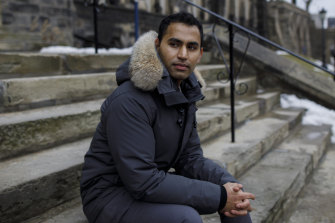
Toronto, Canada: Refugee advocates have described a Rohingya asylum seeker's escape from Australia's offshore processing centre on Manus Island, and successful resettlement in Canada, as unprecedented and extraordinary.

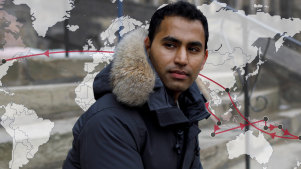
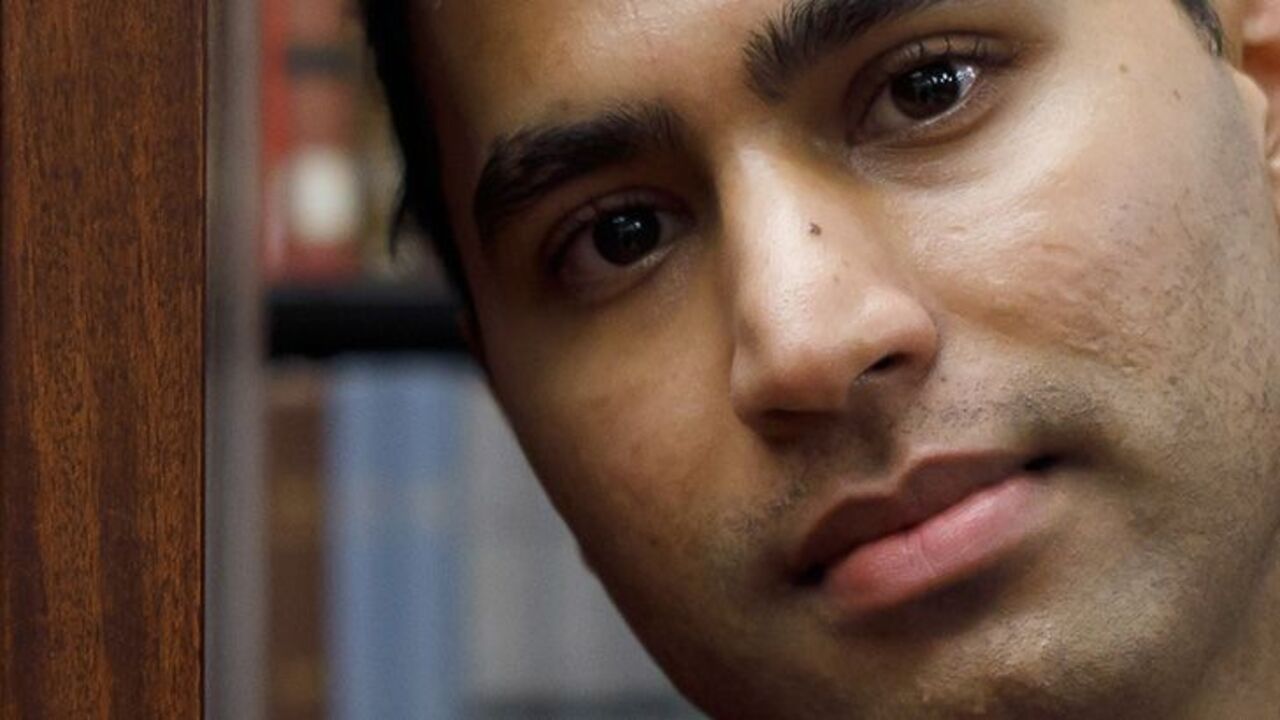
Jaivet Ealom, 27, has spoken publicly for the first time about his high-risk and secretive journey to freedom in a series of interviews with The Sydney Morning Herald and The Age in Canada.

Jaivet Ealom staged a daring escape from Manus Island before eventually making his way to Canada.

Jaivet Ealom staged a daring escape from Manus Island before eventually making his way to Canada. CREDIT:COLE BURSTON

Ealom says he escaped from the Manus Regional Processing Centre in May 2017 and boarded a flight to Port Moresby by posing as an interpreter.

He then lived for six months as a fugitive in Papua New Guinea and the Solomon Islands before arriving unannounced in Canada, where he was granted protected refugee status.


"Nothing like this has ever come to light before," Paul Power, the chief executive of the Refugee Council of Australia, said.

"It is extraordinary. I've never heard of anything like this."

Other sources in the refugee sector confirmed to The Sydney Morning Herald and The Age that they had never heard of a similar successful escape from offshore detention and resettlement in a third country.

Ealom was detained in Christmas Island for six months in 2013 and then spent 3½ years on Manus Island. He said his escape plan was influenced by the plot of the hit US television show Prison Break.

"I realised I had to take things into my own hands and do something," he said. "I was stateless, I didn't have any documentation. I could see things were just going to get worse."

The extraordinary journey of Jaivet Ealom, who escaped from Manus Island Detention Centre and became a politics student in Canada.

An Iranian asylum seeker, Loghman Sawari, fled from Manus to Fiji in January 2017, but was deported and returned to PNG. He was arrested for using false information to obtain a passport, but the charges were later dropped.

Amir Sahragard, an Iranian asylum seeker who was detained on Manus at the same time at Ealom, said he had no idea where his friend had gone when he vanished from the island.

He was stunned to discover his friend was living freely in Canada.

"It's unbelievable," he said. "He was the only one who ever escaped from there and made it out."

The Manus Regional Processing Centre was closed in October 2017.

A spokesperson for the Home Affairs Department said that regional processing arrangements on Manus Island were the responsibility of the PNG government.

"Persons under regional processing arrangements are free to depart a regional processing country at any time to pursue migration options," the spokesperson said.

"Any person seeking to voluntarily depart for their home country or to a country to which they have right of entry, is permitted to do so and, where appropriate, is provided with financial assistance to do so."

The department said 699 refugees have been resettled in America under the deal with the US government while another 26 have been resettled in other countries.

In November, Iranian asylum seeker Behrouz Boochani, author of the award-winning No Friend But the Mountains, travelled from PNG to New Zealand for a literary festival and overstayed his visa.

He said he had been offered resettlement in the US but was also open to resettlement in a third country.

Tuesday, 18 February 2020

What does the Myanmar Provisional Measures Order by the International Court of Justice mean for ASEAN?

Source 
It is long overdue for ASEAN to sync its policies towards Myanmar with international opinion, legal and human rights, and the global public. 
 

On January 23, 2020, the International Court of Justice, the UN's highest judicial authority which handles legal disputes among the member states, announced its decision to proceed with The Gambia vs Myanmar and issued the provisional measures aimed at preventing (further) genocidal acts against Myanmar's Rohingya people and at protecting the evidence of the past atrocities which Myanmar troops committed against the ethnic minority community in 2016 and 2017.

This is the 3rd application of the international treaty known as the Convention on the Prevention and Punishment of the Crime of Genocide or Genocide Convention since the Convention was first adopted in 1948, following the Nazi Genocide.

Damningly, this twofold decision was unanimous among the 17-judges. It was also extraordinary in that the German judge, handpicked by Myanmar as its ad hoc judge, and the Chinese judge whose position was unsure – Beijing's approach is to treat the Rohingya crisis as merely a bilateral humanitarian issue between Bangladesh and Myanmar ­– cast their votes with the rest of the judges.

Malaysia: ASEAN's Principled Voice

Since the two bouts of organised violence in Myanmar's Rakhine in 2012, ASEAN on its part has adopted a similarly humanitarian perspective to what has increasingly come to be viewed legally as international crimes against Rohingyas by Myanmar. In this, Malaysia has emerged as a principled and compassionate voice for the persecuted minority, notwithstanding certain policy shortcomings, (for instance, denial of educational access), as the single largest ASEAN host of Rohingyas – over 100,000.

The international human rights community – and the Rohingyas themselves – view ASEAN's exclusively "humanitarian" approach to the crimes of Myanmar as nothing short of a whitewash for the well-documented and solemn crimes in international law including war crimes, crimes against humanity and genocide in Rakhine.

The ICJ's decision last month to proceed with the case despite Myanmar Agent Aung San Suu Kyi's official request to dismiss it was based significantly on the weight of the evidence which prima farci led the judges to conclude unanimously that there is a real plausibility that the court will in due course find that Myanmar commissioned the crime of genocide or certain acts of genocide when the merits of the case are examined.


Non-Interference Stands in Tatters

The above-mentioned genocide plausibility established by the world's highest court and the court's order to institute the periodic reporting regime solely targeted at Myanmar while the case proceeds, and the issue of Myanmar's compliance are issues which frontally challenge ASEAN's policy orthodoxy of "Non-interference".  It calls into question the business-as-usual approach by the group as a bloc as well as respective policies of the individual member states.

Worse still, ASEAN states such as Singapore have taken advantage of this founding principle by investing most heavily in Myanmar – the city-state is now the largest foreign investor in Myanmar – while in effect serving as Myanmar's public relations platform for genocide denials by its senior most leaders including Aung San Suu Kyi. As a matter of fact, Singapore's role in propping up and defending the criminal Burmese leadership predated the genocidal purge of 2016 and 2017. Myanmar's former chief of military intelligence and Prime Minister ex-general Khin Nyunt thanked the late Lee Kwan Yew for the strategic advice the latter offered on how to improve the Myanmar regime's negative image, in the 40-minutes Al Jazeera English documentary Exiled.

"They are forced to lead sub-human lives, with no freedom of movement, no prospect for third country resettlement, no Internet, no electricity, no proper schooling or livelihood opportunities." Daily life of Rohingya refugees at Balukhali Camp in Cox's Bazar, Bangladesh on February 02, 2019. Photo: Sk Hasan Ali / Shutterstock.com


Deplorable Living Conditions

Meanwhile, Rohingya survivors in deplorable subhuman conditions in the camps in Bangladesh – estimated at 1 million including both the new arrivals from the 2016 and 2017 waves, and the generation left from the earlier waves between 1992 and 1995 – continue their attempts to reach third countries, particularly Malaysia. As recently as this week, a Malaysia-bound boat carrying 125 Rohingya refugees including women and children capsized in the Bay of Bengal killing at least 16.

Myanmar's persecution of Rohingya people is not a product of the country's democratic transition nor is it a "communal violence or conflict" between the Buddhists in Rakhine and primarily Muslim Rohingya community. These early spins to help cover up the systematic and intentional destruction of the Rohingyas have been proven to be untrue by the turn of events over the last 8 years.

Myanmar's disenfranchisement, denial of their right to a nationality, displacement and large-scale deportation of the Rohingya minority are now a well-documented institutionalised policy of ethnic group persecution. The policy has resulted in a devastating impact on the Rohingya community, which the ICJ explicitly stated in its 28-page decision last month as a protected group under the Genocide Convention.

Danger Remains

In its final report to the United Nations in 2019, the UN-mandated International Independent Fact-Finding Mission officially warned against the possibility of recurring genocide against the group. There are an estimated half-million Rohingyas trapped inside Myanmar's Rakhine state where 100,000 have remained locked up in the so-called Internally Displaced Persons camps since 2012, ostensibly for their own protection. It bears pointing out that the Nazis rounded up their Jewish victims and put them in camps and ghettos under the banner of "protective custody".

The rest of the Rohingyas – about 400,000 to 500,000 – are languishing in the apartheid conditions in what Rohingya residents themselves describe as "vast open prisons", not unlike the conditions of the Palestinians trapped in Gaza and West Bank.

As ordered by the ICJ, Myanmar will be submitting the initial report in the last week of May – 4 months from the date of the ICJ order on 23 January. It is widely expected that Myanmar will not comply with the court's order in good faith: it will manipulate the absence of specificities in the ICJ order in terms of protecting Rohingyas and preventing genocidal acts, for instance, incitement to further attacks.

Concurrently, the International Criminal Court has officially embarked on the full investigation of Myanmar's crimes against Rohingyas. And the Myanmar government of Aung San Suu Kyi has remained defiant against the ICC's calls for cooperation over the criminal court's official investigation.


States Must Step-Up

In light of these ground-breaking developments within the international accountability mechanisms at both the ICJ and ICC, concerned states within the ASEAN region – particularly Malaysia need to provide the much-needed push for the bloc to discuss the implications of the ICJ ruling. Even Myanmar leadership evidently knows that the blanket denial of the international crimes has zero credibility when it made a rare admission of its crimes a week before the ICJ ruling. Suu Kyi Government's official Independent Commission of Enquiry revealed its new legal and media narrative: yes, war crimes may have been committed by Myanmar against Rohingyas but no evidence of genocide was found.

The January 23 ICJ order was anchored in the court's unanimous opinion about the genocide plausibility in Myanmar. It is, in effect. a blow to ASEAN's sacrosanct principle of "non-interference" and the disingenuous framing of the persecution and destruction of Rohingya.

In addition, ASEAN ought to be concerned about a parallel development within the global accountability space. The International Criminal Court has embarked on its full investigation of crimes against humanity and other associated crimes plausibly committed by Myanmar. Although Myanmar is not a signatory to the Rome Statute which midwifed the ICC and has repeatedly dismissed any claim of ICC's juridical authority over its conduct, the ICC has established the extended jurisdiction over Myanmar's violent treatment of Rohingyas, 730,000 that were deported in 2017 alone onto the soil of a state that is a party to the Rome Statute.

Malaysia has also felt the direct impact of Myanmar's crimes as it is forced to host over 100,000 Rohingya refugees with no prospect for third country resettlement or repatriation back to their homeland of Western Myanmar.

Act Now ASEAN!

It is long overdue for ASEAN to sync its policies towards Myanmar with the international opinion, legal, human rights and global public.

ASEAN needs to prove that it is a part of the solution, rather than being a Bystander in yet another genocide in its backyard after Khmer Rouge genocide four decades ago.

Maung Zarni

Maung Zarni is the co-founder of FORSEA, a grass-roots organization of Southeast Asian human rights defenders, and the co-author of "Essays on Myanmar's Genocide of Rohingyas."

* Opinions expressed in this article are the author's own and do not necessarily reflect FORSEA's editorial stance.

Saturday, 8 February 2020

Rohingya Boat People to be Returned to Homes in Myanmar’s Rakhine State

Source RFA, 6 Feb

Note: now for some what Rohingya been referred as "resident of Rakhine state"?

but the rest info can't be trusted as about 100 of Rohingyas those imprisoned in southern part of Burma in end of 2012 were despite freed under Thein Sein's amnesty in 2013 were sent for hard labour camps across Shan and Kachine state..


Rohingya refugees are seen aboard a vessel in the Andaman Sea before they are picked up by the Myanmar Navy in waters off southern Myanmar's Thanintharyi region, Dec. 15, 2019.
Photo courtesy of Myanmar Commander-in-Chief's Office

Myanmar authorities have confirmed that more than 130 Rohingya Muslims who were part of a larger group detained in December by the Myanmar Navy in waters off Tanintharyi region while traveling to a third country are residents of Rakhine state, a district official said Thursday.

The 133 were among the more than 170 Rohingya picked up by coastal forces in the Andaman Sea as they attempted to leave Myanmar. All of them were transferred by boat to western Myanmar's Rakhine state in early January, where immigration officials in the regional capital Sittwe have been working to determine whether they are from northern Rakhine state.

"We have conducted an assessment and sent back [home] those who could be confirmed as residents of Myanmar," said Soe Aung, administrator of Rakhine's Muslim-majority Maungdaw district.

"Those who still have homes in their villages are returning to their homes," he said. "Those who don't have homes will live with their relatives."

Win Hlaing Oo, assistant director of a Rohingya refugee reception center in the district's Nga Khu Ya village, said officials could only accept the boat people once they had confirmed proof of their residency in Myanmar.

Officials had first been asked to access the identity of the boat people in Kawthaung in Tanintharyi region, where they were taken after they were picked up at sea, he said.

"So we have had to decide if they are genuine residents and work through many procedures," Win Hlaing Oo said.

Officials have not be able to confirm the status of 20 others among the group, and there have been delays with submitting reports to senior authorities, he said.

Authorities have meanwhile determined that one of the detained Rohingya is a citizen of Bangladesh, and they are negotiating with Bangladeshi authorities for that person's repatriation, he added.

Maungdaw district resident Hammad Shari said it will be difficult for the Rohingya boat people to return to their villages of origin, many of which were burned during a military-led crackdown in northern Rakhine in 2017.

Security forces targeted Rohingya communities in a rampage of violence following deadly attacks on police outposts by a Muslim militant group, killing thousands and driving more than 740,000 others to Bangladesh.

"In Maungdaw region, many villages are gone," Hammad Shari said. "I don't know how these people can go back to their homes."

The root causes

Nickey Diamond, an activist with Southeast Asia-based Fortify Rights, said authorities must address the fundamental issues that are driving the Rohingya to flee Myanmar.

"In Rakhine, their lives are tough, and so they try to run away," he said. "Those who get caught are given prison sentences. When they are in a condition in which authorities cannot send them to jail, they have been sent back to where they came from. Returning them does not resolve the ongoing problems."

Myanmar views the Rohingya as illegal immigrants from Bangladesh and denies them full citizenship as well as subjects them to discriminatory policies such as denying them freedom of movement. They also are prevented from accessing jobs, education, and health care.

Though Myanmar and Bangladesh have signed an agreement to repatriate some of the hundreds of thousands of Rohingya who fled northern Rakhine and now live in sprawling refugee camps, none of those approved for return have gone back, citing fear of further violence and ongoing denials of full citizenship and other basic rights.

"I don't see the government trying to address the root causes," Diamond said. "After the Rohingya [boat people] have returned, they may run away again if the conditions are not right for them."

"The government should try to understand why they are running away and what pushed them out, and resolve the root causes of the problem," he said.

Reported by Kyaw Lwin Oo for RFA's Myanmar Service. Translated by Ye Kaung Myint Maung. Written in English by Roseanne Gerin.

Bangladesh allows education for Rohingya refugee children

Source Dhakatribune, 28 Jan

According to Unicef, since August 2017, providing pre-primary and primary education to the children of the Rohingya refugees has been their main focus
File photo: Rohingya children in refugee camps in Cox's Bazar, Bangladesh going to school Syed Zakir Hossain/Dhaka Tribune
 

'We don't want a lost generation of Rohingyas'

Rohingya children living in the refugee camps in Bangladesh will be allowed to receive a formal education after a change of heart by Dhaka in a move welcomed by right activists.

Nearly one million Rohingyas, including more than half a million children, live in the squalid and crowded camps in Cox's Bazar, near the southeastern border with Myanmar, where many had fled from in 2017 after a brutal military crackdown.

The children were previously barred from studying the curriculums used in Bangladesh and Myanmar, and instead received primary education in temporary learning centres set up by the UN children's agency Unicef.

"We don't want a lost generation of Rohingyas. We want them to have education. They will follow Myanmar curricula," Foreign Minister AK Abdul Momen told AFP on Tuesday.

The decision came after a meeting of a national taskforce set up by the government.

Local media reported that a pilot program involving more than 10,000 students would be launched soon, with Unicef and Dhaka jointly designing the curriculum.

The refugee children will be schooled in Myanmar history and culture up to age 14, and will also receive skills training so they can take up jobs back in Myanmar when they return home, the Foreign Ministry said.

""I can't express my joy with words. Generations of Rohingyas hardly had any education in their homeland in Myanmar as they were discriminated there and were robbed of their citizenship," Rohingya youth leader and human rights activist Rafique bin Habib said.

"The decision will minimize the chances for a Rohingya kid to get radicalized [in the camps]," he added.

UN representative in Bangladesh Mia Seppo told AFP the move would "make it easier for them to go back home to Myanmar when the time is right for returns."

Some Rohingya children have used fake Bangladeshi identity cards and hidden their ethnic identities to enrol in local schools.

Authorities last year expelled scores of them from schools in a drive condemned by rights groups.

Tens of thousands of other Rohingya children were also educated in madrasas set up by Islamic groups in the camps.

The government's decision came almost a week after the UN's highest court ordered Myanmar to do everything in its power to prevent the genocide of Rohingyas.

"This is an important and very positive commitment by the Bangladeshi government, allowing children to access schooling and chase their dreams for the future. They have lost two academic years already and cannot afford to lose any more time outside a classroom," said Saad Hammadi, South Asia campaigner at Amnesty International, in a statement.

He added: "It is important that access to appropriate, accredited and quality education be extended to all children in the Cox's Bazar area, including Rohingya refugees and the host community.

"The international community has a key role to play here in ensuring the Bangladesh government has the resources it needs to realize this goal."