Friday, 22 February 2013

Myanmar asylum seekers say they floated 25 days, and 97 died before rescue in Sri Lanka

Source foxnews, 22 Feb
 

Myanmar asylum seekers rescued by Sri Lanka's navy last week say they floated for 25 days at sea and 97 people died of starvation after Thailand's navy intercepted them and forcibly removed their boat's engine. The Thai navy has denied the allegation.

Thirty-two men and a boy now held at an immigration detention center near Sri Lanka's capital, Colombo, were rescued last Saturday when their dilapidated wooden vessel began sinking while making a perilous journey to Malaysia.

All are Rohingya Muslims who face heavy discrimination in Myanmar, and say they do not want to return there.

The survivors were suffering from serious dehydration when they were rescued about 400 kilometers (250 miles) off Sri Lanka's east coast. The Sri Lankan navy said they were alerted to the sinking vessel by a fisherman.

"The journey was dangerous, but we had to do that ... as we fear for our lives, no jobs, and big fighting" in Myanmar, one of the survivors, Shofiulla, told The Associated Press.

Sectarian violence in western Myanmar has killed hundreds of people and displaced 100,000 more since last June. The Rohingya speak a Bengali dialect and resemble Bangladeshis, with darker skin than most people in Myanmar, which is mostly Buddhist. They are widely regarded as illegal immigrants from Bangladesh.

The United Nations estimates the Rohingya population in Myanmar at 800,000, but the Myanmar government does not recognize them as one of the country's 135 ethnic groups. Most are denied citizenship and have no passports, though many of their families have lived in the country for generations. Bangladesh also refuses to accept them as citizens.

The United Nations High Commissioner for Refugees expressed concern Friday over the rising number of deaths of Rohingya at sea and urged Myanmar's government to promote reconciliation in conflict-hit Rakhine state and ensure them basic living conditions and eventual access to citizenship.

While commending the Sri Lankan navy's quick response, UNHCR also said there are continuing reports of some countries in the region putting boat people back to sea. It asked countries to "keep their borders open to people in need of international protection ... (and) offer them temporary assistance and protection until durable solutions can be found."

Shofiulla, 24, said 130 people were on the boat when the journey to Malaysia began on Jan. 10. Each had paid $465.

After 10 days' travel, he said the boat reached the Thai border and two boats from the Thai navy intercepted them. Shofiulla said the navy personnel took their engine.

"Then we (had) no food, no rations ... no water. We drank only sea water," he said, adding that the bodies of the 97 who died over the next 25 days were put into the sea.

Col. Thanathip Sawangsaeng, a Thailand Defense Ministry spokesman, denied the allegations.

"This is absolutely not true. The Thai navy officers would have not done that," he said, adding that similar accusations have arisen in the past, including claims that the Thai navy had abused refugees. "The Royal Thai Navy commander has previously made it clear that the Thai officers have treated the boat people according to humanitarian principles." "There are two approaches in handling the Rohingya: giving them food and help before letting them carry on their sea journey or prosecute them for illegal entry. However, it's not possible that the Thai navy would have done what they were alleged of doing."

The Thai army said last month that it had suspended two senior officers pending an investigation into their alleged involvement in trafficking Rohingya people from Myanmar to other countries.

Shofiulla said he is a second-year student studying microbiology, but that his university was closed last July after the violence erupted. "We can't go back to our country ... our government kills Muslims ... we are afraid to go back. We want to go to a safe place," said Shofiulla, who appeared to be the only English-speaking person in the group.

He said they wanted to go to Malaysia to find jobs, following in the footsteps of others from his village. He said 25 people were now in the detention center while eight others were still hospitalized.

Sri Lankan Immigration and Emigration Controller Chulananda Perera said his department has informed Myanmar's embassy in Colombo and is seeking its cooperation in identifying the survivors to begin the process of sending them back but has not received a response.

There was no immediate comment from the embassy.

___

Associated Press writer Thanyarat Doksone in Bangkok, Thailand, contributed to this report.


Read more: http://www.foxnews.com/world/2013/02/22/myanmar-asylum-seekers-say-floated-25-days-and-7-died-before-rescue-in-sri/#ixzz2LjW5TTH1

Religious attack in Rangoon wreaks havoc on local community

Source DVB,
 
 21 Februaryruins
A screenshot of a Muslim school in Thaketa township, Rangoon after being assaulted by a mob on 18 February 2013. (DVB)

A local Burmese community has been left terrified after an angry mob of 300 Buddhists viciously attacked a Muslim school and several businesses in a suburb outside Rangoon earlier this week, according to local sources.

It follows news that hundreds of Buddhist nationalists launched a violent assault on a religious school in Thaketa township on Sunday, after it applied for permission to have its roof repaired. Reports suggest that the mob believed the building was being developed into a mosque.

On Monday, the mob returned to ransack businesses and homes, including hurling bricks and abuse at petrified locals. The violence has spread fear and confusion among local Muslims, who say they have never before had any problems with their Buddhist neighbours. Most of the people DVB interviewed did not believe that the vandals had come from the local community.

"Some [shady-looking] characters arrived in a truck – about three or four of them jumped out carrying sticks, blended into the crowd and began shouting stuff," a local witness told DVB. "Then a whistle blew from the truck and the three guys in the crowd yelled "get them!" and rallied the crowd [to attack]."

Many local families told DVB they are still too afraid to sleep in their homes and don't understand why their community was attacked. Over 20 families reportedly fled the area, even though riot police were quickly deployed on the ground.

"We were afraid so we left," explained a 35-year-old mother. "At night the children don't sleep, they don't study. When I leave them at school now they are still shaking with fear."

A spokesperson for the Islamic Religious Affairs Council Myanmar told DVB that the Muslim school had recently sought approval to renovate its roof, but because the structure had exceeded its permitted height by five feet, the municipal authority subsequently withdrew its authorisation. Rumours then quickly circulated that the school was being built into a mosque.

"I assume they misunderstood about the building – [Muslims] are required to wash themselves before reading the religious text so there are water taps [wash rooms] in Muslim schools," said Wunna Shwe. "And according to our religious teachings – we have to pray at the prayer time."

Police confirmed to DVB that four people were detained after the violence – none of which were identified as locals – but were released on Thursday. But Wunna Shwe insisted that both residents and outsiders were likely involved in the violence, which has the potential to trigger further religious tensions in the capital.

Reports suggest that local media, as well as prominent public personalities, played a role in stirring the hostilities. In an article published on 17 December, The Voice Weekly published accusations that a mosque was being developed and quoted inflammatory remarks by the controversial monk Wirathu, who has repeatedly spearheaded Islamophobic campaigns in Burma.

"It is true. [Muslims] are sneakily building mosques at night time," he told the The Voice Weekly. "There are plenty of those mosques in Burma containing cellars and tunnels underneath like military bases."

The article was later removed without explanation.

Over the past year, Burma has come under international scrutiny for its treatment of Muslim residents – notably the stateless Rohingya in western Burma, who clashed with local Buddhists in two bouts of violence last year. But this is the first major episode of religious violence to spill into the heart of the capital, which also hosts a large Muslim population.

"Burma has been a country where people of different religious beliefs live together in harmony and it is sad to see we have to be like this to each other when we are living in the age of openness and transparency; what everyone longed for," said Wunna Shwe.


-Aye Nai contributed reporting.

Wednesday, 20 February 2013

Burmese Authority supplies guns to Rakhine Second Time in Northern Maungdaw

Source Mayupress, 20 Feb
 
One-Platoon-ALA

Edited By Mohamed Farooq

The Burmese government supplies ten guns to each Rakhine village on 16 February 2013 in Northern Maungdaw. The Arakan Liberation Party (ALP) and Rakhine National Development Party (RNDP) formed a youth group having a leader to every Rakhine village who are under training with gun and long swords to attack Rohingya at any time.

Rakhine can move and carry their activities openly as there are no barriers and attachments from government. The Rakhine terrorists target to rise up third massacre of Rohingya within their water festival will held in April. The president of RNDP and Member of Parliament, Dr. Aye Maung stated about the third violence in the Parliament of Burma.

Rakhine terrorists are well trained up and ready to attack Rohingya again in their desired time. The Rakhine terrorists and Burmese authority aim to root out all the Rohingya from the land of Arakan and make free Muslim Zone. Not only in Arakan (known as Rakhine state) but also has every corner of Burma resumed to destroy Muslim by extremist Buddhist with the full support of government policy.

Horror at Sea: 98 Bodies Thrown Overboard as Boatpeople Perish from Thirst, Starvation

Source Phuketwan, 19 Feb
 
PHUKET: Survivors of a Burmese deathship, saved after two months adrift, have told of throwing 98 bodies overboard as their fellow companions perished.

The 31 men and a boy who were rescued 463 kilometres from land by the Sri Lankan Navy said they originally set sail two months ago from northern Burma for Indonesia or Australia.

Instead, the suspected Rohingya found themselves languishing on the Indian Ocean, dying one by one of thirst or starvation or dehydration in a nightmare voyage.

The rescue of survivors is likely to throw into sharp media focus the core cause - Burma's ethnic cleansing of its Muslim minority Rohingya - and the lack of an international policy to stop the slaughter.

''They said they had carried food and water for only one month and they had been in the sea for two months after the ship engine stalled,'' police spokesman Prishantha Jayakody told Reuters in Colombo, Sri Lanka's capital.

''Their captain and 97 others have died due to dehydration and starvation. They also said they had thrown the dead bodies into the sea.''

Thousands of boatpeople have set out in record numbers, since October especially, to sail past Phuket to sanctuary in Malaysia, knowing that many boats sink but determined to sail because life in Burma can't get any worse.

The saga of the people rescued off Sri Lanka this week adds a new and horrible dimension of death by thirst and starvation at sea.

Most of the boats leaving from northern Burma still carry just men and boys but boats departing from further south around the troubled township of Sittwe now also carry women and children.

Two boatloads of Rohingya have fetched up off Phuket in recent weeks. The first, apprehended off southern Phuket on January 1, carried women and 10 children aged under 10.

They were taken ashore on compassionate grounds, trucked north quickly and put bach on another boat by authorities within 48 hours.

The second boatload consisting of 205 men and boys was apprehended off Racha island, south of Phuket, on Janauary 29, and ''helped on'' straight away by the Royal Thai Navy with extra water.

The word has since reached the people smuggling brokers in Burma that Thailand is no longer bringing boatpeople to shore, sticking instead to its ''help on'' policy.

India is now believed to have adopted the same policy. Australia, on the other hand, has the equivalent of a ''pushback'' policy designed to repel boatloads of queue-jumping would-be immigrants.

Thailand dropped that ''pushback'' policy in 2009 after hundreds of Rohingya perished at sea off Indonesia and India's Andaman and Nicobar islands.

Without an international approach to force Burma to end the violence against the stateless Rohingya and grant them some basic rights, the horrors at sea will continue.

140 Rohingya refugees arrested in Penang National Park

Source nst, 18 Feb
 

BALIK PULAU: Some 140 Rohingya refugees starved for three days, before 35 of them, including children, were arrested in the jungle of the Penang National Park today.

Aged between a year old to 70s, they were arrested about 3pm after they were found loitering around the Teluk Kampi beach, and are believed to have entered the country's waters by using a barge 13 days ago.
When met, one of the refugees, Mohamad Rovic, 26, said they had to get off the boat and wander around for shelter, with some having run away into the woods.
He said there were those who went hungry for three days due to fear of being arrested by the authorities.
"I came here to find my brothers who have been working here for a while. I don't want to go back home as it feels much safer here and I also want to find a job," he said.
Meanwhile, Southwest district police chief Superintendent Mohd Hatta Mohd Zin confirmed their arrests and said police were now searching intensively for the others.
He said operations are still ongoing and those detained were brought to the district police headquarters for further checks before being handed over to the Immigration Department.
He added that police were also assisted by the Wildlife Protection and National Parks Department (Perhilitan) as well as the Malaysian Maritime Enforcement Agency (MMEA).
"For the time being the operations at the park are ceasing until the remaining Rohingyas are found," he said.


Read more: 140 Rohingya refugees arrested in Penang National Park - Latest - New Straits Times http://www.nst.com.my/latest/140-rohingya-refugees-arrested-in-penang-national-park-1.220680?cache=03%3Fpage%3D0#ixzz2LUukSnog

Statement of the Special Rapporteur on the Situation of Human Rights in Myanmar

Source UNIC, 16 Feb

By Tomás Ojea Quintana, 16 February 2013, Yangon International Airport, Myanmar

I have just concluded my five-day mission to Myanmar - my seventh visit to the country since I was appointed Special Rapporteur in March 2008. I would like to express my appreciation to the Government of Myanmar for its invitation, and for the cooperation and flexibility shown during my visit, in particular for my visits to Rakhine State and Kachin State.

In Naypyitaw, I met with the Home Affairs Minister, parliamentarians, the Chief Justice, Attorney General, Deputy Minister of Foreign Affairs, Deputy Minister for Border Affairs, and the Minister of Social Welfare, Relief and Resettlement.

In Yangon, I met with prisoners of conscience released since my last visit, members of the Interim Press Council, visited the offices of the Myanmar Times, met with members of the 88 Generation, protestors involved in the Moehti Moemi gold mine and Letpadaung copper mine protests, a range of civil society organisations, the Myanmar National Human Rights Commission, and the Dean and students of Yangon University. I also met with Daw Aung San Suu Kyi and discussed a broad range of human rights issues. While in Yangon, I visited Insein Prison, met with five prisoners of conscience, and made a tour on conditions, speaking to inmates along the way, including prisoners in solitary confinement. And I met with members of the United Nations Country Team and briefed the diplomatic community. I would like to thank the Resident Coordinator and the Country Team for the support provided to me during my mission.

I also visited Rakhine State and Kachin State. In Rakhine State, I visited Muslim and Buddhist IDP camps in Sittwe, Myaybon and Pauk Taw, and also visited Sittwe Prison. In Kachin State, I visited IDP camps in Myitkyina and Waingmaw and also visited Myitkyina Prison. I would like to thank the Government for organising these visits and for the freedom of movement I was granted, which allowed me to assess the human rights situation on the ground.

In Kachin State, I am encouraged by the developments in the ceasefire dialogue, and hope it will continue to progress over the coming weeks. I have been particularly concerned over the previous months of the escalation of military offensives, which has brought further death, injury and destruction to the civilian population. Furthermore, the ongoing large military presence, which remains beyond the reach of accountability mechanisms, means that serious human rights violations are continuing there. Based upon my visit to Myitkyina and interviews with persons in the IDP camps and detainees in Myitkyina prison, I am concerned about the ongoing practice of arbitrary arrest and torture during interrogation by the military of Kachin men accused of belonging to the Kachin Independence Army (KIA).

While I welcome the peace talks in China, the resolution of the conflict will need to address the role played by ethnic minorities in the reconstruction of the nation. I therefore highlight the importance of involving community based organisations, which are dealing with the consequences of the conflict, to participate in a transparent process of political dialogue and negotiation.

In the meantime, I urge both the military and non-state armed groups to comply with international human rights and humanitarian law, and to address the use of anti-personnel landmines. Over the years of conflict in Kachin State, the use of anti-personnel landmines has been widespread by both sides and they continue to cause death and injury to civilians as well as severe psychological trauma to the communities. In one of the camps, I met a teacher who had suffered serious injuries to his leg in a blast from a landmine. The Minister of Defence informed me during this mission that the Ministry of Social Welfare, Relief and Resettlement had established a mine risk education programme. While I welcome this initiative, I urge the authorities to also begin the process of demining in the areas where the conflict has ceased, and to ratify the Anti-Personnel Landmine Convention.

I welcome the recent decision of the Government to allow a United Nations convoy to deliver humanitarian assistance to non-government controlled areas in Kachin State, but am concerned about the pace of implementation of this decision and will be monitoring this. Humanitarian access is still a challenge in Kachin State. While acknowledging the security issues for the humanitarian staff referred to by the Ministry of Defence during this mission, I believe that there are administrative and political obstacles that can be overcome to improve access. Furthermore, the harassment of local staff from humanitarian organisations and steadily decreasing donor funding are also having a detrimental effect on the provision of humanitarian assistance in Kachin State.

Yesterday and today I visited three IDP camps in Kachin State. I was deeply moved to hear from families whose houses had been burnt down, their livelihoods destroyed, and who had had to leave loved ones behind, with thoughts about their future filled with apprehension and uncertainty. I also heard cases of forced recruitment by both Government and non-state armed forces. These people are living in shelters in IDP camps that are meant to be temporary, but they are becoming increasing permanent as the conflict goes unresolved. I believe that both the Government of Myanmar and the non-state group hold a heavy responsibility to reach a common understanding that will enable them to lay down their arms and build a lasting peace.

Rakhine State is going through a profound crisis that threatens to spread to other parts of the country and has the potential to undermine the entire reform process in Myanmar. Both Muslim and Buddhist Rakhine communities continue to suffer the consequences of violence that the Government has finally been able to control, though question marks remain over the extent to which excessive force has been used.

Around 120,000 people are internally displaced in camps, some of whom I met with during my visits to camps in Sittwe, Myaybon and Pauk Taw. I commend the efforts of the Myanmar government and the local authorities and their collaboration with the United Nations and humanitarian organisations to improve the conditions in these camps since my visit last August, including the provision of food, shelter and access to water and sanitation. My major concern lies with the lack of adequate health care in the larger Muslim camps. For instance, in Taung Paw camp in Myaybon Township, I met a woman in dire need of medical attention due to a severe case of gangrene in her foot. This kind of suffering in the camps is unacceptable and I urge the central and state authorities to ensure that adequate medical care is provided to all IDP camps.

This is not just a matter of lack of resources, but requires the safe passage of humanitarian assistance to these camps. Currently, local and international medical staff are unable to provide medical care to some of the Muslim camps due to the threats and harassment they face from local Rakhine Buddhist communities. I urge the local authorities to send a clear message through their networks that this harassment of staff is not acceptable.

The Government also needs to address the issue of freedom of movement of people in these camps. Taung Paw camp in Myaybon Township felt more like a prison than a camp. People need to be given greater freedom of movement to engage in economic activity, such as trade and fishing, and to access education and obtain healthcare. This is also necessary to begin the process of rebuilding trust between communities through interaction, and to restore the dignity of the people who find themselves trapped in these camps through no fault of their own. Furthermore, the IDP camps cannot become permanent settlements for the communities, and if necessary the government needs to allocate land. The Government in Naypyitaw reassured me that the people will return to their villages. However, in Rakhine State, the information among stakeholders is that this won't take place and the current settlements will become permanent, which is particularly concerning with the coming rainy season in May which will flood many of these camps.

Feelings of fear, distrust, hatred and anger remain high between communities. To address this requires education, responsible local journalism, as well as mutually respectful dialogue between community leaders. For my visit, the local authorities organised a discussion between Muslim and Buddhist community leaders, which gave me hope that solutions can be found through mutually respectful dialogue in which both sides are willing to make compromises to find solutions. Local authorities are currently not doing enough in this regard, and must step up their efforts. Time does not heal wounds unless measures are taken to repair relations. To help inform this dialogue, the facts of what has happened need to be established and those responsible for human rights violations held to account, which I hope the Investigation Committee established by the President will help to do in its upcoming report which should be made public.

Mutually respectful dialogue cannot be had while discrimination based on grounds of ethnicity and religion remains unaddressed. I therefore reiterate my recommendation to Parliament that the 1982 Citizenship Act be amended to ensure that all persons in Myanmar have equal access to citizenship and are not discriminated in such access on grounds of ethnicity or religion. In the meantime, the current Act should be applied in a non-discriminatory manner to enable those with a just claim to citizenship, to claim it on an equal basis with others, including those from the Rohingya community.

While in Rakhine State, I also visited Sittwe Prison, and met with Dr. Tun Aung, and we discussed the role that he can play in rebuilding bridges between different communities if he is released. I regard Dr. Tun Aung as a prisoner of conscience who must be released immediately. This is also necessary to demonstrate that Myanmar has made a break from the past and no longer locks people up for political reasons. Furthermore, Dr. Tun Aung's case reveals that Muslims being tried and convicted in Rakhine state in relation to the recent violence are not receiving access to legal counsel, which is a violation of their basic human rights.

I am also dismayed that four INGO staff remain in detention in Rakhine State, having highlighted their cases in my last report to the General Assembly. I must reiterate that the charges against them are unfounded and that their due process rights have been denied and call for their immediate and unconditional release.

Despite the fact that the Government has released a large number of prisoners of conscience, there still remains a significant number. In Insein prison I met with five prisoners of conscience: Aung Naing, Saw Francis, Tun Oo, Win Myint and Zaw Moe. They all should be released and I hope that the soon to be established committee, which I strongly welcomed when I met with the Home Affairs Minister, will include the participation of civil society to help ensure the speedy release of all remaining prisoners of conscience. The Home Affairs Minister appreciated the importance of this issue when I discussed with him the cases of the prisoners of conscience I met in Insein prison and Sittwe prison and the four INGO workers detained in Buttidaung prison.

I continue to be concerned about the practice of torture happening in places of detention in Myanmar. I met with the sister of Mr. Myo Myint Swe, who died following torture during interrogation while in police custody, and the wife of Mr. Phyo Wai Aung, who also allegedly suffered torture during police interrogation and passed away last January only five months after his release following my previous visit. Its ongoing practice highlights the gaps that exist between the reforms at the highest levels of government and the reality on the ground. However, I acknowledge that the Government and state authorities are taking steps to close this gap, and that a new Prison's Law is currently with Parliament. I am also encouraged that the Government has restarted work with the ICRC and hope that this will continue.

I am particularly concerned by the situation in Buttidaung prison in northern Rakhine State, on which I have received serious allegations that Muslim prisoners have been tortured and beaten to death. I urged the Minister of Home Affairs to instruct authorities in Buttidaung Prison to immediately halt any practices of torture and ill-treatment that may be occurring which are contrary to international human rights law.

There has been important progress in developing a more open environment in Myanmar for people to express themselves, including a freer media environment. I met with members of the Interim Press Council, which is largely made up of independent journalists and which, to the Government's credit, has been given responsibility to draft a new media law. This will be an important piece of legislation to protect the freedom of expression of journalists, and I encourage the executive and legislative branches to ensure its speedy passage into law once the draft has been submitted later in the year.

Important gaps which remain include the lack of access to information for journalists, which will require some form of access to information Act to address, as well as the reform of the registration process for print publications, so that the threat of the revocation of licences cannot be used by state authorities as a tool for censorship.

Reform of broadcasting media is lagging behind, and there are currently no steps in place to ensure plurality of broadcast media, such as community radio. The same commendable bottom up approach that the Government is taking with the media law also needs to applied to the drafting of a broadcast law.

When I met with members of Parliament in Naypyitaw, I raised my concerns over their decision last January to approve an investigation of the online activities of a blogger who had criticised MPs' amendments to the Constitutional Tribunal Law. I emphasised that in a democracy, all forms of criticism need to be accepted, and particularly in the case of public institutions.

In my meeting with the Myanmar Times Chief Editor at the Myanmar Times' Offices, we discussed the new freedoms experienced by newspapers. And we also discussed the ownership issues of the Myanmar Times, and I was concerned to hear about the continued detention of his former business partner.

Progress in realising the right of people in Myanmar to assemble and demonstrate represents well the stage that Myanmar is at in its reform process. Important changes have taken place at the top, such as the passing of a Peaceful Demonstration and Gathering Law, but not to the point where international human rights standards are met. I discussed with parliamentarians, the Home Minister and the Attorney General article 18 of the law, which requires permission from local authorities to demonstrate and provides for up to one year in prison for a demonstration held without permission. I highlighted that only notification should be required and that imprisonment for peaceful assembly can never be justified.

Furthermore, there is a gap between reform at the top and implementation on the ground. Permits for assemblies are being granted and denied arbitrarily and on political grounds, and the behaviour of law enforcement personnel towards protestors is not always consistent with international human rights standards. I met people who participated in the Letpadaung Taung protests, and they described how incendiary devices had been used to disperse protestors, resulting in serious injuries. In my conversation with the Home Affairs Minister, he denied that any incendiary devices had been used. I look forward to the results of the Investigation Committee chaired by Daw Aung San Suu Kyi to look into these events and to clarify whether excessive and disproportionate force was used. I also discussed with the Home Affairs Minister capacity development that can be provided to law enforcement officials to ensure that the United Nations Basic Principles on the Use of Force and Firearms by Law Enforcement Officials are complied with.

During my time in Yangon, I could already see changes from the flow of investment and opening of businesses here. There is a unique opportunity to channel this energy to pursue a form of development which enables the realisation of human rights in Myanmar. However, there is also the potential that development projects will have a detrimental effect on the human rights situation, through land confiscations, forced evictions, environmental degradation as well as reinforcing corrupt power structures and further concentrating wealth and resources in the hands of the few. Through transparency about where money is being spent, consultation with local communities, and investment by business in research which identifies the potential adverse human rights impact of their activities, these concerns can be addressed. There are also institutional reforms that the Government can introduce to guard against the potentially adverse impact of economic development. For instance, I do not believe that Myanmar currently has the mechanisms in place to deal with the flood of complaints about land confiscation and forced eviction that have started in relation to development projects.

During my meetings with the Attorney General, I was encouraged to hear about new legislation being passed that may have a positive impact on the human rights situation, as well as the efforts to develop the capacity of judges and lawyers in international human rights law. However, I didn't see any evidence that the judiciary is developing any independence from the executive branch of government, and urge the Government to work on this. In addition, there are some other laws that remain on the books which have been used against the people, such as the Unlawful Associations Act and the State Protection Act. I reiterate my call to the Government to repeal this kind of legislation.

In addition, the speed of the legislative reform over the past two years is important but at the same time careful attention needs to be paid to the drafting process, which should include adequate consultation with stakeholders such as civil society. Otherwise, problematic provisions, such as those I have just mentioned in the new Peaceful Demonstration and Gathering Law, will be repeated.

I met members of the Parliament, and I was encouraged by the continuing development of Parliament's role. I openly discussed with them, including a member (colonel) of the 25 per cent military presence, the tendency of military MPs to vote in accordance with instructions from higher military authorities. Though this is in accordance with the constitution of Myanmar, it demonstrates a gap in the democratic functioning of the Parliament.

The need for constitutional reform was discussed with a range of stakeholders during this mission. The current Constitution contains a number of provisions which could undermine the rule of law and fundamental human rights. During my discussions with government and non-governmental stakehoIders, I was encouraged that there was open discussion about the importance of the Constitution to reflect the needs and aspirations of the Myanmar people, and that it could be changed if the people desired it. Also, ethnic minority groups have stressed that constitutional reform is needed to reflect their demands for more control over their own affairs, and that it is crucial for the consolidation of ceasefire agreements and political agreements.

I also believe that the Constitutional Tribunal can play an important role in bringing the Constitution to be in compliance with international human rights standards through their mandate to interpret the Constitution.

To finish, in my meetings with different stakeholders, including members of Parliament, I insisted on the idea of addressing the important issue of truth, justice and accountability through the creation of a truth commission at the parliamentary level. What happened during the previous military governments remains untouched. I believe this is crucial for the process of national reconciliation and to prevent future human rights violations by learning from the past. The Government has a responsibility in this regard, but this idea will take time to take hold and will be up to the people of Myanmar to develop.

To conclude,

The reforms in Myanmar are continuing apace, which is a good sign for the improvement of the human rights situation in Myanmar. While this process of reform is continuing in the right direction, there are significant human rights shortcomings that remain unaddressed. I believe that as time passes it becomes more urgent to address these shortcomings before they become entrenched.

Also, gaps remain between the reforms at the top, and the reality and implementation on the ground, which I appreciate will take time to close. While recognising the significance of the reforms that have taken place, the international community should also focus on the implementation of reforms. The steps that the Government is taking in this regard should be continued and expanded, such as human rights capacity development for police, army, judges and lawyers.

I believe that the continuing existence of my mandate is relevant to help highlight the shortcomings and to help the government in implementing its reforms in line with international human rights standards. The mandate is also necessary to remind the international community of their important role in prioritising human rights when engaging in bilateral relations with Myanmar, including in business and investment relations.

I want to again thank the Government of Myanmar for its invitation and cooperation. I look forward to another visit to the country before my next report to the General Assembly in 2013. And I reaffirm my willingness to work constructively and cooperatively with Myanmar during this historic time to improve the human rights situation of its people.


ENDS

Monday, 18 February 2013

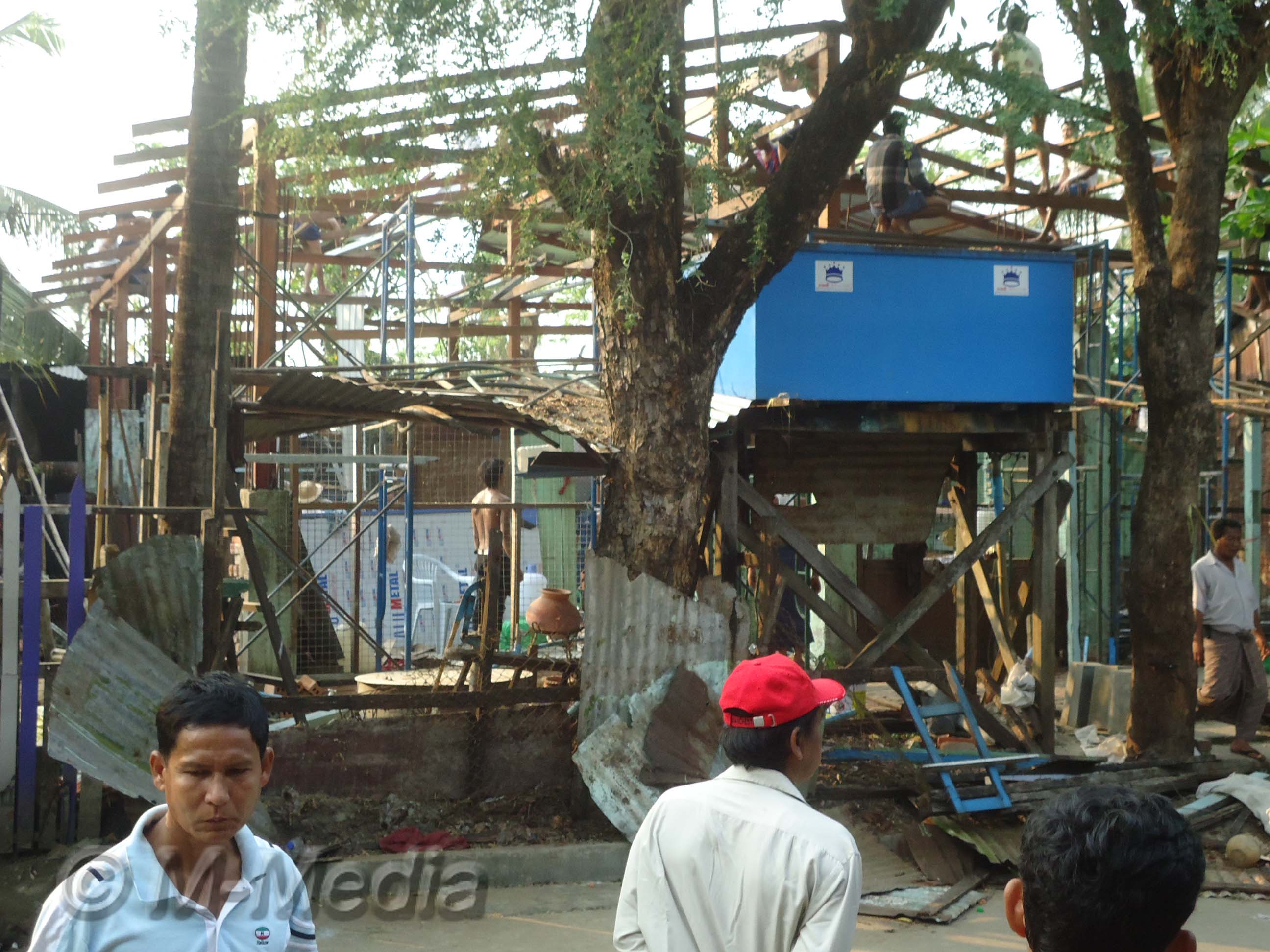
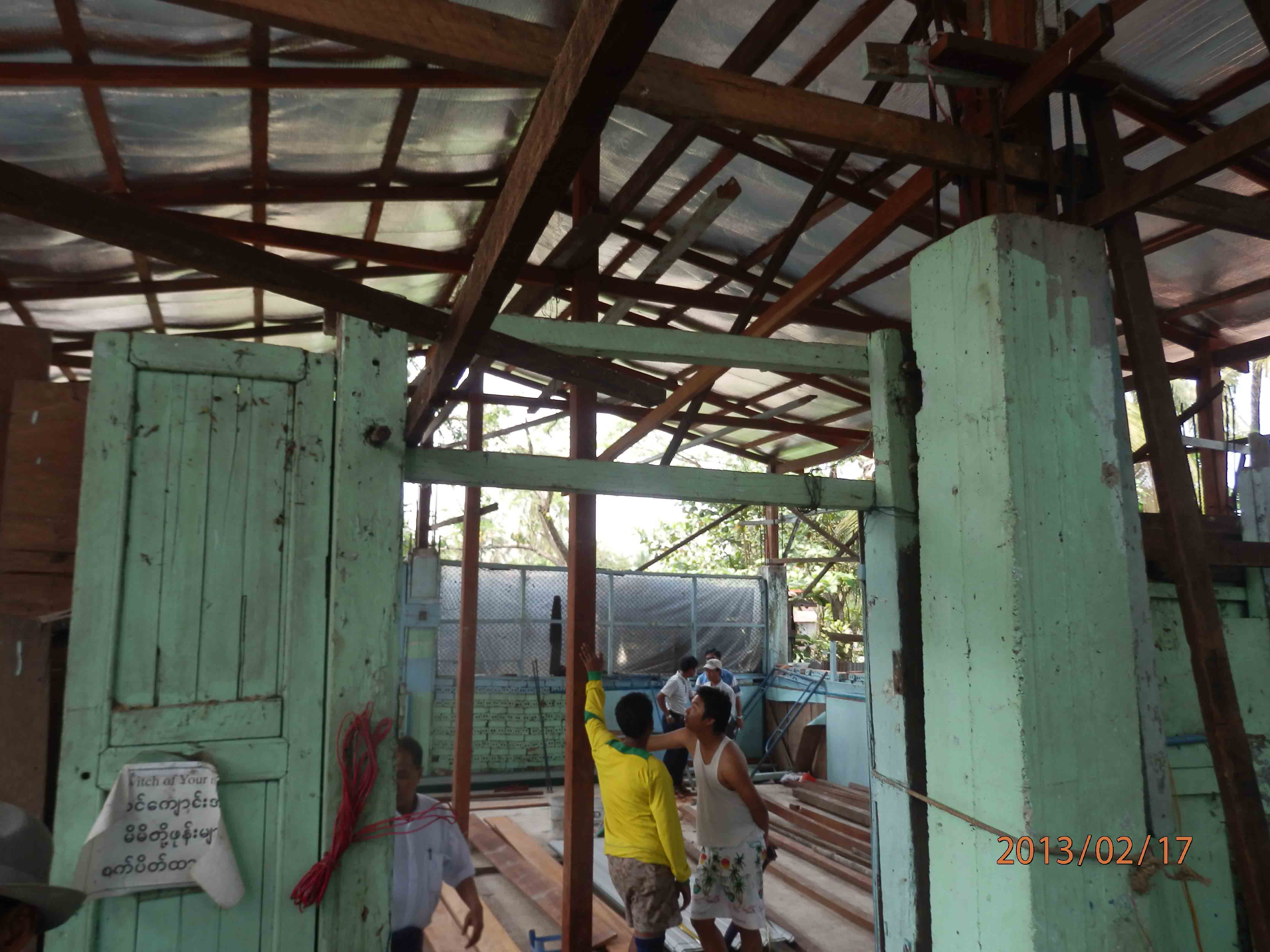
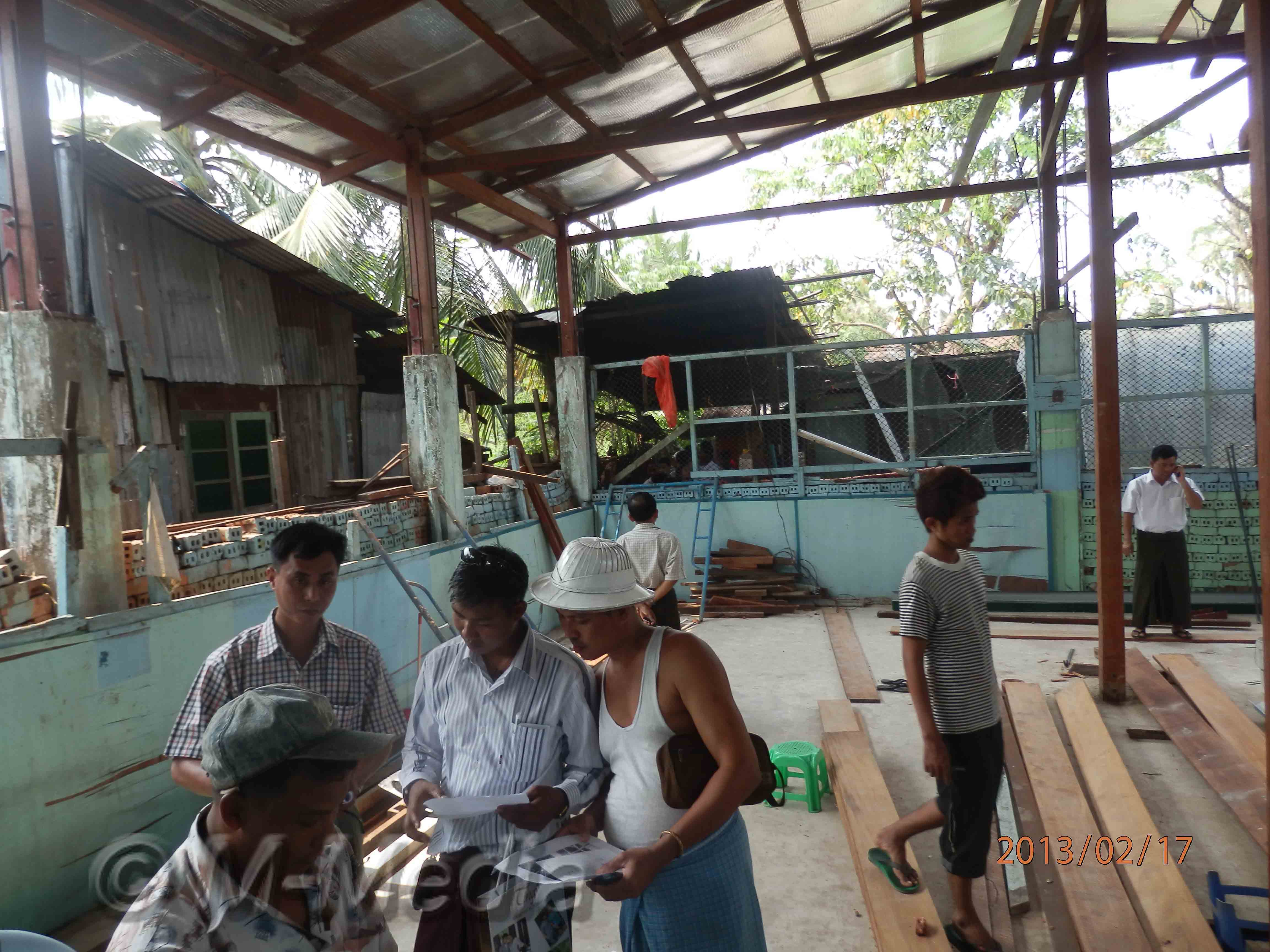
300 Buddhists Attacked A Muslim Religious School in Yangon

source M-mediagroup, 17 Feb
DSC09217
DSC09222 3 22

A crowd of about 300 Buddhists attacked a Muslim Religious school in Yangon this morning. The crowd also attacked Muslims who tried to stop the violence.

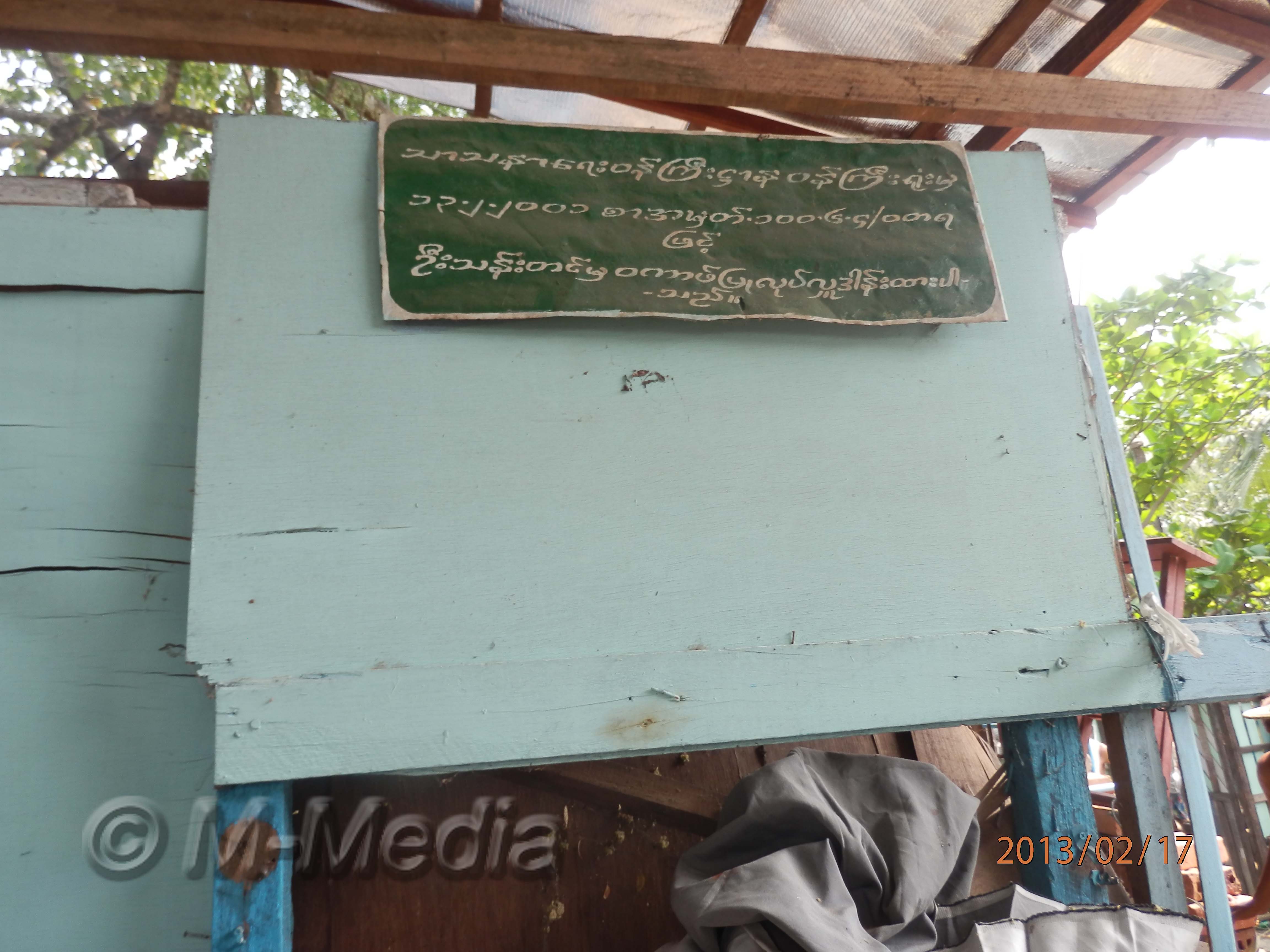
The school is located between 18th and 19th street in Thar Ka Ta township. As permitted by the Ministry of Religious Affairs, the school has existed since 2001 and it now requires fixing the roof.

After receiving necessary permission from the municipal authority, the school administrators started repairing the roofs. But the Section In-charge or Sae Ein Mu (literal meaning: the person who is in-charge of 10 houses) was upset about it, and some extremists started the attack, followed by other residents.

A Buddhist eyewitness said, "The crowd attacked the school by saying 'Kalar are perky. They are trying to make the small one into a big one. They can't do like that. Kalars have to be kicked out from the land of Myanmar'".

During the attack, there were two police. They told the crowd that the school would be demolished after two weeks, but the crowd did not listen.

M-Media learns that the mob also attacked a Muslim man who was then saved by the police.

Tin Maung Than, secretary general of Islamic Affairs Council who was also a member of the Arakan conflict investigation commission, arrived in the area and asked Sae Ein Mu about the event.

Being upset, Sae Ein Mu said 'attack, attack' and some members of the crowd punched and attacked Tin Maung Than and his colleague, Zaw Min Latt.

According to a representative from a Muslim organization, five major Muslim organizations in Myanmar are holding a meeting about the violence today. They will address the case and also report it to Nay Pyi Daw.

The organizations are also discussing about The Voice Weekly Journal's erratic reporting. Instead of saying the roof repair, The Voice reported as 'building a new mosque', leading to public anger.

The Buddhist majority in Myanmar are against the existence of mosques, leave alone building new ones. The Voice's false report frustrated the public.
Nyi Win, a Yangon resident, told M-Media, "The Voice posted photos about today case on its Facebook network, captioning it to be about the construction of a new mosque".
He added that public swearing and anti-Muslim comments are appearing again on The Voice's Facebook Page. Nyi Win is worried that anti-Muslim mobilization will spread across the country via the internet.
2
He added that public swearing and anti-Muslim comments are appearing again on The Voice's Facebook Page. Nyi Win is worried that anti-Muslim mobilization will spread across the country via the internet.
11

Wednesday, 13 February 2013

UN envoy meets with displaced residents, prisoner in Arakan state

Source DVB,  13 February 2013 quintana-rangoon-feb12

Tomas Quintana, UN special envoy on human rights in Burma, reads his statement during a news conference before his departure in the VIP lounge of the Rangoon International Airport in February 2012. (Reuters)

Click to watch video on Youtube


The United Nation's Special Rapporteur for Human Rights in Burma Tomas Quintana travelled to western Burma's Arakan state yesterday, where he visited internally displaced person (IDP) camps and met with an incarcerated Muslim community leader.

According to a local who is taking shelter in the camp in Myebon that houses around 4,000 Muslims, camp residents spoke with the envoy about the trauma that was inflicted upon their communities during the ethno-religious riots that erupted in June and October last year.

The deadly riots displaced tens of thousands of residents and left a disproportionate amount of Muslim villages in ruins.

The displaced residents asked Mr Quintana to help push for the relocation of their current camp to a safer location.

"We are afraid to remain in this area – we have nowhere left to run if the riots breakout again," said the local, who spoke on the condition of anonymity. "We have lost our homes – twice – and all of the villagers have expressed their wish to be relocated to a safer area."

He said the camp's residents signed a petition last November, during a visit from government authorities who were asking those at the camp whether they wanted to resettle in their former villages or elsewhere.

"We signed the petition to have us relocated in either Sittwe or elsewhere in mainland Burma for the safety of our lives," said the local, adding that the refugees also pressed for further food, medical and security assistance.

"As of now, we are only surviving on food rations provided by the World Food Programme and there are a lot of difficulties with health care."

Arakan State's Border Affairs Minister Colonel Htein Linn and Attorney General Hla Thein accompanied Quintana during the trip, but they did not attend his meeting with the displaced residents in the camps.

From Myebon town, the Special Rapporteur travelled to Sittwe to visit another camp and met with a Muslim elder who is imprisoned in the state capital's prison.

However, before the team arrived in the Arakan state capital, a local Rohingya translator and activist Aung Win was briefly detained by the police. Aung Win was allegedly aiming to meet with Quintana during his visit to Sittwe.

According to local police, Aung Win was released on Tuesday evening.

In Sittwe, Quintana met with community leader Tun Aung, a Muslim man who is currently detained in Sittwe prison after being sentenced to 11 years in November during a trial that the Asian Human Rights Commission (AHRC) called "patently unfair".

According to AHRC, Tun Aung is in poor health and is not receiving adequate medical treatment.

Quintana was set to visit Insein Prison in Rangoon earlier today along with representatives from the country's political parties, UN groups and civil society organisations.

The UN envoy will travel to Naypyidaw tomorrow to meet with government officials and representatives from the commissions tasked with investigating the Arakan riots and the assaut on protestors at Latpadaung copper mine last November.

He also will visit IDP camps in Kachin state before heading out of the country on 16 February.

Quintana will present a briefing on human rights in Burma at a UN Human Rights Council session in March.


Tuesday, 12 February 2013

Arakan officials instructed to restrict Muslims’ travel

Source DVB, 12 Feb
 
muslim-sittwe-ID
Muslim women in Arakan state's Sittwe hold ID cards while they wait to cast ballots during the 2010 general elections. (Reuters)


Immigration officials in Burma's restive Arakan state have been instructed by authorities to prevent all Muslims from travelling outside of their townships, according to local sources.

An immigration official in Sandoway township in southern Arakan state told DVB that authorities from the state government had called their department on the phone on Monday to pass on the order.

"I don't know much about it apart from that it [came by] phone instruction from the Arakan state government," said the official who spoke on the condition of anonymity. "We just found out today when our supervisor spoke to senior officials on the phone."

A local resident who spoke on the condition of anonymity in Sandoway township said she was told by the chief district immigration official that they had received orders to prevent Muslims, including those with identification cards, from travelling.

"I was planning to go to Rangoon tomorrow but was unable to buy a plane ticket as there has been an order to not allow [Muslims]," said the local, who has an official identification card.

According to the resident, the order was sent out to checkpoints and officials. When she asked the district immigration chief whether the orders applied to everyone in the state, he allegedly replied: "No, only Muslims."

"The immigration office said they couldn't approve our travel as there is an order from the state [immigration authorities]. They said they can't allow even those with citizen ID cards without approval by state immigration."

The order came as UN Special Rapporteur for Human Rights to Burma Tomas Ojea Quintana visited the state and a prominent Rohingya activist was arrested by police earlier today in Sittwe.

While stateless Rohingyas have long-since had their movements restricted by state authorities, Muslim residents in the western state with official papers have been allowed to travel more freely.

-Aye Nai contributed reporting.

Prominent Rohingya human rights activist arrested in Sittwe

Source DVB, 12 Feb 2013arakan-2
Human rights activist Aung Win. (DVB)


A prominent Rohingya human rights activist and interpreter, who has helped many international journalists travelling to the conflict-torn Arakan state in western Burma, was detained by authorities in Sittwe on Tuesday morning, local police have confirmed.

Aung Win, an ethnic Rohingya with Burmese citizenship, was arrested around 10am this morning on his way to Sittwe's Muslim quarter, Aung Mingalar. Local sources say he was hoping to meet with the UN Special Rapporteur for Human Rights in Burma, Tomas Quintana, who was visiting the state-capital as part of his latest Burma tour.

Local police told DVB that he was "found walking in the streets" and taken to "the station for his own safety". They alleged that he has since been released and returned to his home village on the outskirts of Sittwe. But local sources said they had been told by a police officer that he would not be released until 6pm and that his detention was specifically designed to prevent him from meeting Quintana. At the time of writing, Aung Win could still not be reached by telephone.

Aung Win has helped a number of international media groups, including DVB, travel to the restive state in western Burma, where sectarian clashes pitted Buddhists against the stateless Rohingya minority last year. Local sources say that over 25,000 Burmese army troops have since been deployed to the region to enforce segregation between the two communities.

"Apparently he did want to talk to Mr Quintana but it is unclear whether that alone would be the reason for his arrest," Chris Lewa from the Arakan Project told DVB on Tuesday. Aung Win is an outspoken critic of the treatment of Rohingyas in western Burma, and has featured in several international media reports about last year's violence.

Since the first outbreak of clashes in June last year, more than 1,600 Rohingya Muslims have been arrested, including many community leaders with ties to the international media. His detention comes less than a day after DVB published allegations of widespread abuse and torture targeting detained Rohingya in Arakan state.

A spokesperson for the UN Office for the Commission of Human Rights told DVB that they have "just received information" of Aung Win's arrest and were trying to make contact with Quintana to discuss the allegations. The Special Rapporteur is spending a week travelling through Burma, including the volatile Kachin and Arakan states, in a bid to assess the country's human rights situation.

Some 800,000 Muslim Rohingyas live in western Burma, where they are denied basic rights, including citizenship and have been described by the UN as one of the world's most persecuted minorities.

President Thein Sein has been widely lauded for introducing a series of democratic reforms in the country since March 2011, including freeing political prisoners and easing media restrictions. But analysts say that progress has been mixed, especially in ethnic minority regions.

Monday, 11 February 2013

Nearly 1,000 Muslim Rohingyas incarcerated in Arakan state

Source DVB, 11 Febbeach-image
Muslims who escaped sectarian violence in Arakan state gather on beach near a refugee camp outside of the state capital Sittwe on 30 October 2012. (Reuters)


Nearly 1,000 Muslim Rohingyas, including women and children as young as ten, remain incarcerated in northern Arakan state – accused of inciting sectarian clashes last year – where campaigners say they are subject to "pervasive" abuses and at least 68 people are believed to have died in custody.

New data obtained by DVB shows that torture and violence, including the sexual exploitation of minors, is widespread throughout prisons in northern Arakan state, where at least 966 Rohingyas have been detained since November last year. At least 10 women and 72 children, aged between 10 and 15 years old, are understood to be among the prisoners.

An estimated 1,600 Rohingyas were initially arrested in northern Arakan state after two bouts of sectarian clashes with local Buddhists, although many were later released after paying bribes "as high as 20 million kyats (USD$23,350)" to local officials, Chris Lewa from the Arakan Project told DVB. Some of the prisoners were initially held together with Buddhists, where they faced regular beatings – often with the support of authorities.


"Every day a group of 10 to 15 new prisoners were taken out of their ward and beaten by jail police and Rakhine [Arakanese] prisoners," said a 70-year-old former inmate in Buthidaung jail, who was initially sentenced to five years, but later released. "Elderly Muslim prisoners, including me, were ordered to put the dead bodies into sacks and leave them at the jail gate. The dead bodies were taken away at night."

Sixty-two deaths were recorded in Buthidaung jail alone, where prisoners also reported being forced to shower naked in public and routinely subjected to torture and sexual humiliation.

"Many [new inmates] had no clothes and it was clear that many had been badly tortured before their arrival in Buthidaung jail," another former inmate said. "Some had broken bones; others knife injuries – some with cuts on their head and some on other parts of their body."


The figures seen by DVB roughly correspond with government statistics released in December, which suggested that 849 Bengalis – the term officially used for the stateless Rohingya – were among the 1,121 people detained for their role in last year's violence, which displaced over 125,000 people. Some 233 Arakanese were also in detention at the time, although many have since been released.

Aye Maung, who was recently released from Sittwe jail along with nine other Buddhists accused of burning down a Muslim village, told DVB that 85 percent of the remaining 200 prisoners were Rohingya. He added that Arakanese inmates were treated as they would have been back in the "junta times" unless they "complained" about their conditions. But he insisted that Buddhists and Muslims were kept separately and "there were no problems" between the communities.

"Speaking to Rakhine in Sittwe, civil society groups have put a lot of pressure on the authorities to release them," said Lewa. "They even said it was unjust that they had been arrested, that it was the Rohingya that set fire to their own houses. It seems to confirm that the Rakhine can get out a lot easier than the Rohingya."

Roughly 800,000 Muslim Rohingya live in northwestern Burma, where they are viewed as illegal Bengali immigrants and denied basic rights, including citizenship. The state government was accused of siding with the Buddhist Arakanese in last year's clashes.

"Many [new inmates] had no clothes and it was clear that many had been badly tortured before their arrival"

Many of the detained Arakanese have been charged with lesser offences, including breaching the curfew imposed by the president in June, which usually carries sentences of less than six months. But most of the Rohingya have been targeted with draconian sections of Burma's penal code, which carry sentences of up to 13 years.

A number of prominent Muslim leaders have also been detained in what campaigners describe as an "arbitrary" campaign to silence those with connections to the international community or media.

Kyaw Hla Aung, a lawyer and former worker for Médecins Sans Frontières, was one of several aid workers arrested in June after being accused of having links to Al-Qaeda. He was released in August only after sustained pressure from the aid group and the international community.

"I am the only lawyer among the Rohingya people so they are worried that I can communicate with others and I have the political knowledge so they are afraid of me," he told DVB during a recent field visit to Sittwe.

Similarly, Dr Tun Aung, a retired doctor and Islamic community leader, was sentenced to 11 years in jail in November after "sending news abroad" and allegedly failing to notify the authorities about potential violence. He was convicted at a closed trial – and many of his witnesses reported being blocked from travelling to court to testify in his defence.

His family says they have not been allowed to visit or even speak to him over the phone since his arrest in June. His daughter, Thiri, told DVB that the entire family is "very worried about his health" and fear that the 65-year-old has been tortured.

"This is by far one of the worst examples, where freedom of all forms – professional freedom, freedom of expression and the rights of a person who is charged with a crime – have been violated by the state authorities in Burma," said Bijo Francis from the Asian Human Rights Commission.

The International Committee for the Red Cross (ICRC) has recently resumed prison visits in the former pariah state, which is eventually expected to include Arakan state, but a spokesperson admitted that they will "not question the reasons for arrests" and none of their findings will be made publicly available.

Lewa further warned that a number of inmates in northern Arakan state had been threatened not to speak to the ICRC or risk being killed.

President Thein Sein's government has been credited for introducing dramatic democratic reforms in Burma, including freeing political prisoners and easing media restrictions. On Thursday, state media announced the formation of a commission to investigate how many political prisoners remain in Burma, but rights groups have raised questions over its independence and scope. The government declined to comment on the allegations in this report.

-Min Lwin contributed additional reporting.

Over 600 illegal Rohingya migrants held in Thai raids

Source Reuters, 11 Feb
 
(Reuters) - At least 600 Rohingya Muslims believed to be illegal migrants from Myanmar have been detained in Thailand after two raids by the authorities near the border with Malaysia, police said on Friday.

More than 300 Rohingya were discovered on Tuesday in a building in the town of Sadao, while a second raid on Thursday at a rubber plantation near the border town of Pedang Besar uncovered 393 more, including 14 children and 8 women.

"These illegal migrants have been handed over to immigration authorities and will be deported back to Myanmar," Police Colonel Krissakorn Paleetunyawong, deputy commander of police in the area, told Reuters.

An estimated 800,000 Rohingyas live in Myanmar but are officially stateless. The Myanmar government denies them citizenship, regarding them as illegal Bangladeshi immigrants, but Bangladesh does not recognize them as citizens either.

Hundreds make their way abroad each year by boat, especially to Malaysia, in search of a better life, an exodus given added impetus after recent sectarian violence between minority Rohingyas and majority Buddhist in Myanmar's western state of Rakhine.

The raids in southern Thailand were led by the army and police as part of what they call anti-human-trafficking operations.

"The Rohingyas were en route to Malaysia and the camp we found was used as a holding facility by middlemen paid to facilitate their journey," said Lieutenant Colonel Katika Jitbanjong of Padang Besar police station.

Last week, Thai authorities found 73 Rohingya boat people adrift near the holiday island of Phuket.

They sent the asylum seekers, who arrived in rickety and overcrowded boats, back to sea in Thai fishing boats, New York-based rights group Human Rights Watch said.

Various rights groups called then for the Thai government to scrap its policy of summarily deporting Rohingyas who land up in Thailand. In two separate incidents in 2008, the military pushed 992 Rohingya boat people back to sea without food and water and hundreds may have died, activists have said.

The United Nations estimates about 13,000 boat people, including many Rohingya, fled Myanmar and neighboring Bangladesh in 2012, a sharp increase from the previous year.

Thailand and Singapore refuse to provide asylum to members of the Muslim minority group while Bangladesh has closed its border to them.

"Thailand should scrap its inhumane policy of summarily deporting the Rohingya, who have been brutally persecuted in Burma, and honor their right to seek asylum," said Sunai Phasuk of Human Rights Watch.

(Editing by Alan Raybould and Robert Birsel)